In late October 2025, a high-level delegation led by FEDIL traveled to South Korea for the 13th FEDIL Study Trip, dedicated to artificial intelligence and innovation. Over four days in Seoul, the delegation engaged in a program of strategic dialogues with business federations, leading technology companies, industry leaders, renowned research institutes and ecosystem enablers. The mission focused on concrete exchanges with Korean counterparts, exploring the future of industry and forging new partnerships in innovation.
South Korea stands among the world’s most advanced industrial and technology hubs, globally recognized for its leadership in AI, digital infrastructure, and manufacturing excellence. Its rapid evolution from manufacturing powerhouse to innovation leader makes it a natural partner for Luxembourg’s industry. Seoul offers a dense network of established tech-driven companies, innovative SMEs, and public partners ready to co-innovate. Against this backdrop, the delegation set out to deepen ties and explore pragmatic cooperation in areas such as advanced manufacturing, digital transformation, artificial intelligence, and energy transition
Day 1
Forging new partnerships for the future of industry with the Federation of Korean Industries (FKI)
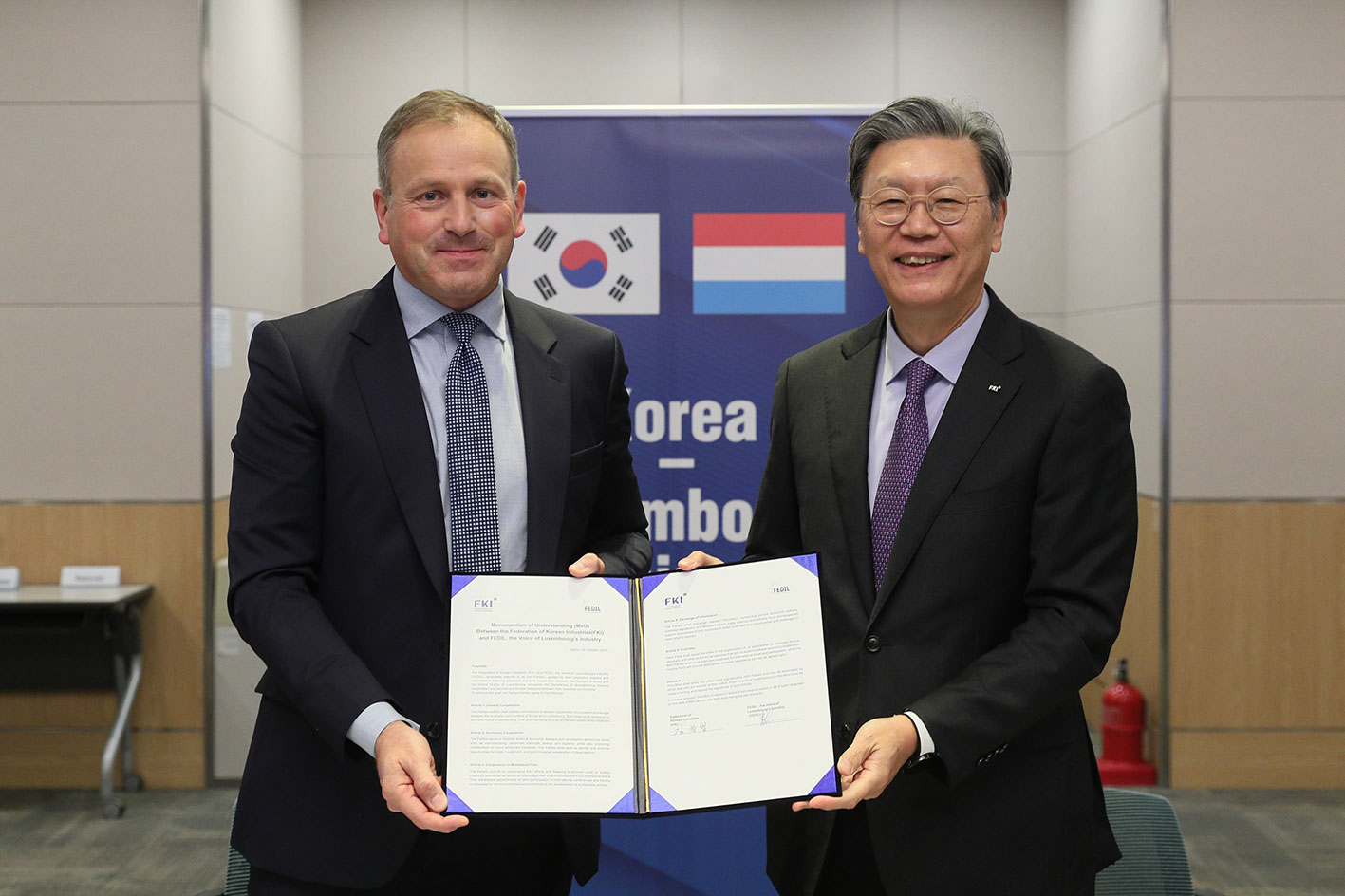
The delegation’s first official engagement in Seoul took place at the headquarters of the Federation of Korean Industries (FKI), a cornerstone of Korea’s economic landscape. Founded in 1961, the FKI is a private, not-for-profit business organization dedicated to economic development and international cooperation based on the principle of free enterprise. FKI serves as the representative voice of Korean business. Its mission is to foster the development and advancement of the national economy by promoting major industries and international economic exchanges, unifying business perspectives and ensuring they are reflected in government policy.
The highlight of the session was the signing of a Memorandum of Understanding between FEDIL and FKI, establishing a practical framework for ongoing collaboration. This agreement is designed to facilitate direct business dialogue, joint initiatives in sectors such as advanced manufacturing, energy, logistics, and future industries, and regular exchanges of economic and regulatory information.
Dr. Tae Kyu Lee from the Korea Economic Research Institute (KERI) offered a frank overview of Korea’s economic situation, highlighting that the country faces short-term challenges such as weak domestic demand and slow construction, set against a backdrop of global uncertainty and moderate growth. However, there is cautious optimism for recovery, as government-led investments in AI are expected to boost productivity and help counteract the effects of an aging population. Korea is undergoing a fundamental transformation, shifting from traditional industries to high-tech sectors like semiconductors, AI, and green technologies. To sustain growth, Dr. Lee stressed the urgent need for structural reforms, regulatory modernization, and diversification of both products and export markets. He also emphasized the importance of investing in R&D, education, and digital inclusion, as well as ensuring reliable energy resources, to support Korea’s transition to an innovation-driven economy.
The meeting also addressed the regulatory and societal dimensions of digital transformation. Mr. Keun Woo Lee, from Yoon & Yang LLC, began by highlighting the transformative potential of artificial intelligence and the urgent need for robust governance frameworks to ensure that technological progress benefits society as a whole. He presented Korea’s policy plans for AI development, focusing on the recently adopted AI Basic Act, positioning the country as a pioneer in AI regulation alongside the European Union. Unlike the EU’s risk-based model, Korea’s framework is designed to be innovation-friendly, emphasizing safeguards for high-impact AI, promoting R&D, and encouraging sector-specific public-private collaboration through sector-specific guidelines. The discussion underscored the shared values between Korea and Europe; transparency, accountability, and human oversight; while also highlighting the importance of ongoing dialogue to harmonize standards and address global challenges in AI.
This high-level exchange at FKI set the foundation for a pragmatic, forward-looking partnership between Luxembourg and Korea’s industrial ecosystems. The MoU provides a framework for concrete collaboration, knowledge sharing, and joint advocacy on global economic issues.
Advanced precision tools and AI transformation in industry at Shinhan Diamond Industrial
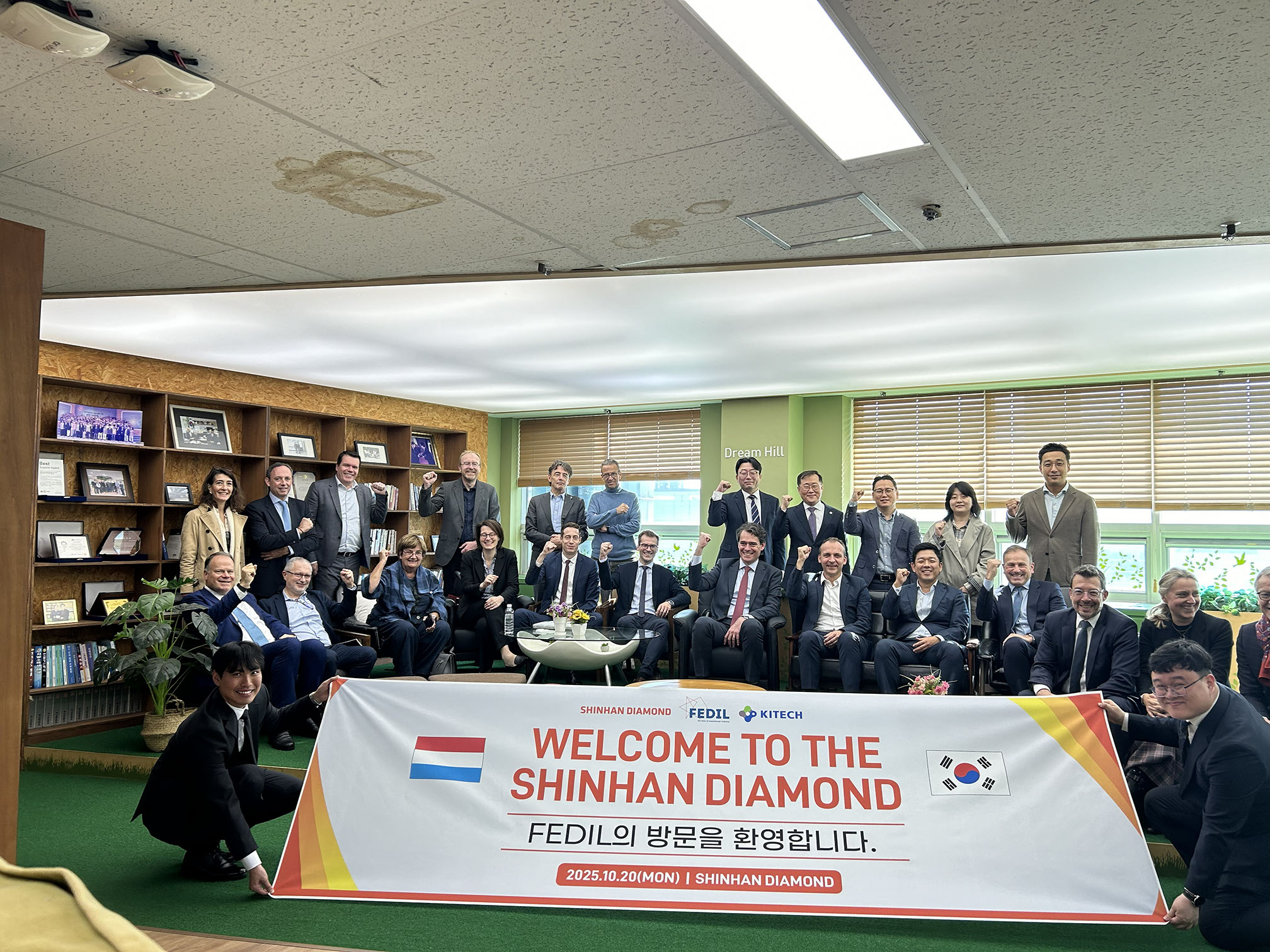
The delegation’s industrial itinerary in Korea included a visit to Shinhan Diamond Industrial, a leading manufacturer of a wide range of diamond tools serving both traditional industries like construction and advanced sectors such as semiconductors. Over the years, Shinhan has become a global supplier, offering specialized solutions that position it as a key player in global value chains.
Shinhan’s team shared their vision focused on globalization, sustainability, innovation, and ethical management, highlighting that the company’s growth is driven by continuous investment in R&D and a strong commitment to quality. They emphasized their proprietary ARIX technology, which allows for precise placement of diamond grits in tools, resulting in faster, more stable, and more efficient cutting performance tailored to specific applications. This innovation not only improves efficiency and product lifespan but also reduces energy consumption and enhances product quality. Shinhan has successfully applied this expertise to the semiconductor sector, developing advanced solutions where precision and durability are essential.
The Korean Institute of Industrial Technology (KITECH) presented the Manufacturing Artificial Intelligence Transformation Alliance (M.AX ALLIANCE) and the AI Factory initiative, a government-backed collaboration designed to accelerate the adoption of artificial intelligence across industries. With significant national funding and ambitious targets for economic impact by 2030, the AI Factory acts as a central hub for developing, texting and deploying AI-driven solutions. The initiative not only aims to drive technological advancement and new business models but also places strong emphasis on ethical and sustainable AI practices to benefit both businesses and society.
These initiatives demonstrate Shinhan’s commitment to embedding artificial intelligence within its manufacturing processes, especially through the creation of AI-powered autonomous production lines in semiconductor fabrication. The alliance’s objective is to fast-track the digital transformation of manufacturing by harnessing AI to optimize operations, boost quality, and increase efficiency throughout the entire value chain.
Following the presentations, the delegation toured the Shinhan Diamond headquarters factory. This visit provided a first-hand look at Shinhan’s advanced manufacturing capabilities and its commitment to continuous improvement through innovation and technology partnerships.
This visit offered the delegation valuable insights into how a Korean industrial champion is embracing digital transformation and global best practices to remain at the forefront of both traditional and next-generation manufacturing.
Pioneering Korea’s AI infrastructure at SKT AI Data Center Testbed
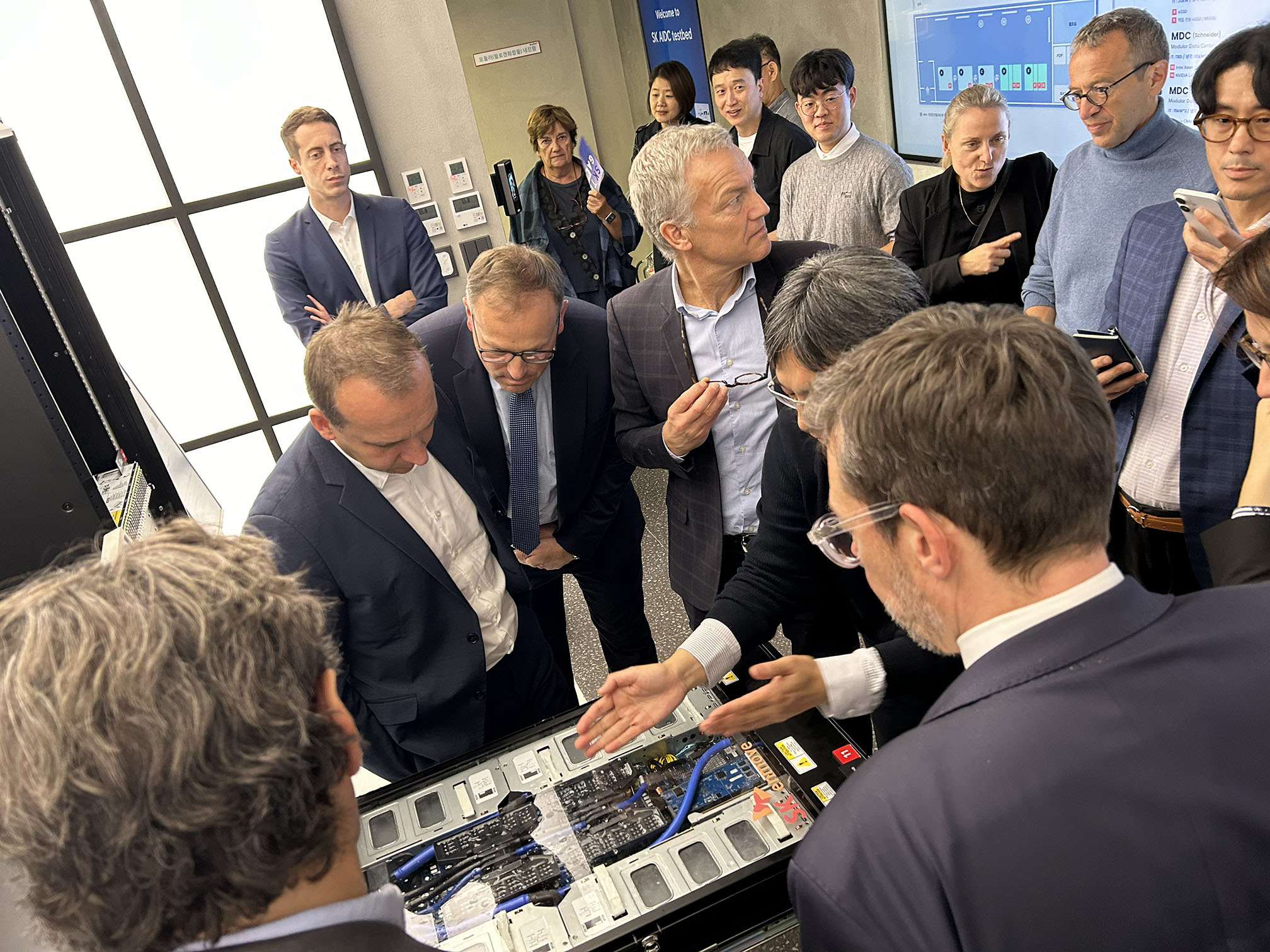
The final visit of the first day brought the delegation to the SKT AI Data Center Testbed, a pioneering facility at the heart of SK Telecom’s “AI Infrastructure Superhighway” strategy.
The delegation visited the AI Data Center Testbed’s cooling room. This facility, unique in Korea, is designed to conduct rigorous tests on cutting-edge AI infrastructure featuring advanced components such as Nvidia’s latest chips, SK Hynix High Bandwidth Memory, and to trial all three major next-generation liquid cooling solutions: direct-to-chip liquid cooling, immersion cooling, and precision liquid cooling. These advanced systems, developed in collaboration with partners, are designed to dramatically improve energy efficiency, a critical factor as AI workloads and data center demands continue to surge.
The SKT AI DC Testbed serves as a hub for innovation, bringing together the expertise of the SK Group and a network of domestic and international partners. Its purpose is to develop, test, and verify advanced technologies that will underpin future hyperscale AI data centers in a collaborative environment. The insights gained here are instrumental for SKT’s plans to roll out GPU-as-a-Service (GPUaaS) offerings and to lead the next wave of AI infrastructure development.
In essence, the visit provided a glimpse into the future architecture of AI data centers, with a strong emphasis on energy efficiency, advanced cooling, and hardware optimization. The SKT AI Data Center Testbed exemplifies Korea’s commitment to building a robust, scalable, and sustainable AI infrastructure to meet the growing demands of the digital era. The group was given a firsthand look at the technologies shaping the future of AI data centers in South Korea and beyond.
Day 2
Leading AI Data Center Innovation with SK Telecom
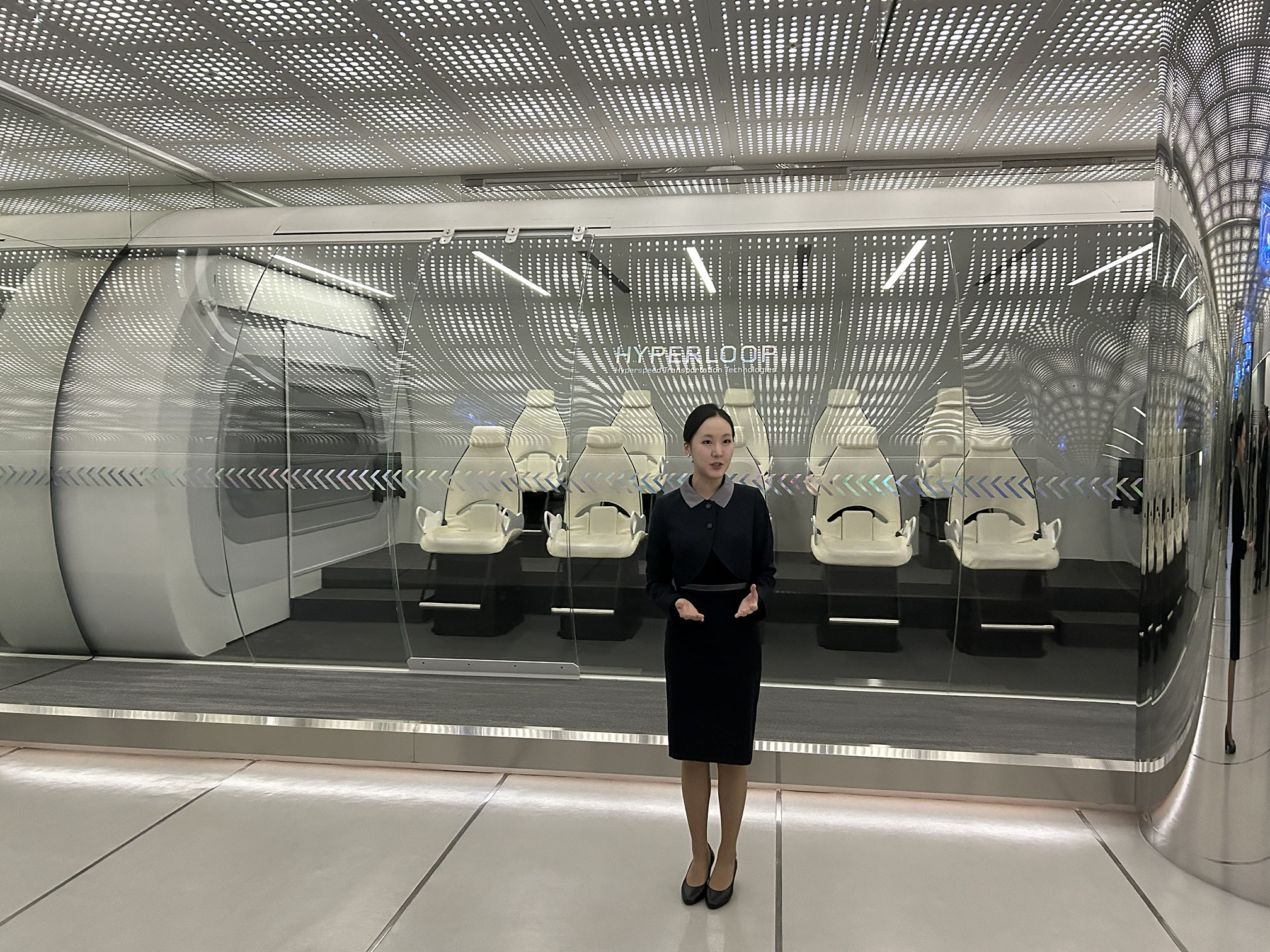
On the morning of the second day, the group from Luxembourg was welcomed into the headquarters of SK Telecom (SKT), a company that stands at the very forefront of Korea’s digital transformation.
SK Telecom is rapidly transforming from a traditional telecom operator into a leader in artificial intelligence and digital infrastructure, with a clear focus on business impact. The company is investing heavily in next-generation data centers, cloud computing, and digital services, aiming to set new standards not only in Korea but also internationally. With eight advanced data centers already operational in Seoul and ambitious plans for global expansion, SKT is positioning itself as Korea’s top data center operator.
During the visit, SKT’s leadership outlined a strategy that places AI at the core of all operations. Their “AI-ready” data centers are designed to handle the most demanding AI workloads, featuring high-density GPU clusters, distributed power systems, and advanced liquid cooling—all managed through an integrated platform for real-time optimization. The delegation was introduced to the “Haein” cluster, Korea’s largest GPU cluster, which exemplifies SKT’s commitment to building sovereign AI infrastructure capable of supporting both national and international innovation.
SKT’s software ecosystem is equally advanced, with platforms that enable efficient management, scaling, and transparency of AI workloads. Their Integrated AI DCIM platform uses digital twin technology for comprehensive oversight, while GPUaaS allows flexible resource allocation. Additional tools like AI Cloud Manager and AI Cloud Radar provide end-to-end solutions for AI development and operational efficiency. For business leaders, SKT’s approach offers a compelling model for leveraging AI and digital infrastructure to drive growth, efficiency, and global competitiveness.
Beyond the technical prowess, the meeting also underscored the growing partnership between SK Telecom and Luxembourg. The relationship, already strengthened by the signing of a Memorandum of Understanding on quantum technologies in October 2023, is now poised to enter a new phase, with both sides exploring collaboration in AI, data centers, and digital innovation. The SKT executives expressed a clear interest in building on this foundation, highlighting the potential for joint projects and knowledge exchange that could benefit both economies.
The delegation’s tour of the T.um ICT experience center provided a fitting conclusion to the visit. Here, members were invited to immerse themselves in a world of autonomous vehicles, drones, virtual and augmented reality, and the Internet of Things. T.um, short for “Technology, Utopia, Museum”, serves as a testament to SKT’s commitment to connecting people, data, and ideas in ways that were once the realm of science fiction.
As the Luxembourg delegation departed SK Telecom’s headquarters, the sense was clear: this was not just a meeting, but the beginning of a deeper dialogue between two innovation-driven economies.
At the heart of Korea’s research excellence at the Electronics and Telecommunications Research Institute (ETRI)
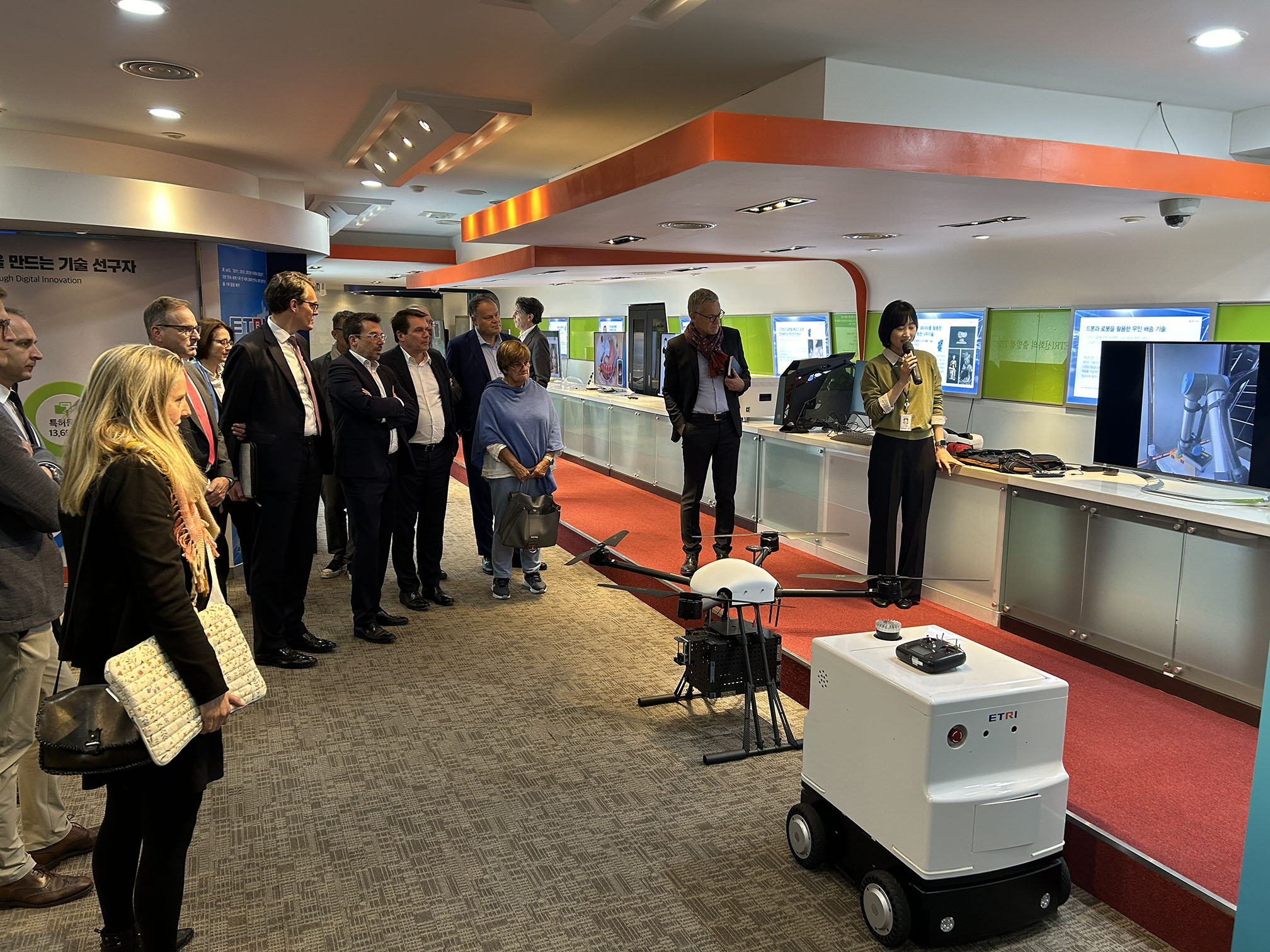
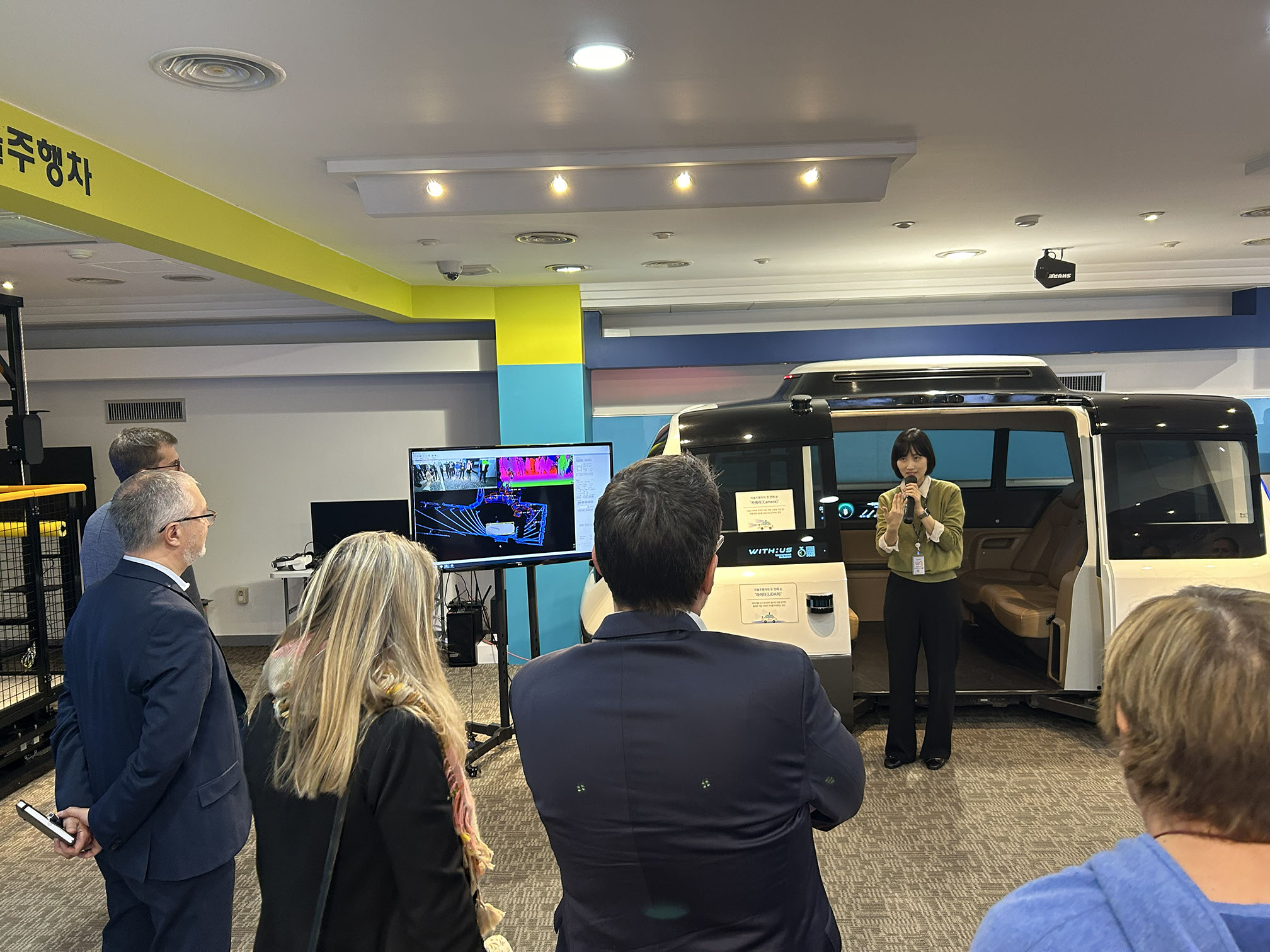
The delegation’s journey through Korea’s technology landscape reached a new milestone with a visit to the Electronics and Telecommunications Research Institute (ETRI), a cornerstone of the nation’s scientific and industrial progress. This visit highlighted the institute’s pivotal role in driving Korea’s technological and economic progress. ETRI stands out as a powerhouse for innovation, with nearly 2,000 researchers and a remarkable track record in digital technologies, including 5G, advanced batteries, and micro-LEDs. The institute’s work has generated significant economic impact and positioned Korea as a leader in global innovation.
During the visit, the delegation explored how ETRI’s research is shaping the future of smart cities, digital health, and autonomous mobility, with artificial intelligence at the core of many projects. ETRI’s multidisciplinary teams are developing practical AI solutions for real-time data analysis, robotics, cybersecurity, and industrial automation – areas directly relevant to business transformation. With a global network of partners and a strong commitment to open science and technology transfer, ETRI offers valuable opportunities for international collaboration, including with Luxembourg, to accelerate digital innovation and business growth.
The ETRI visit not only showcased the depth and breadth of Korea’s research capabilities but also opened new avenues for partnership and knowledge exchange.
Academic powerhouse and engineering the future of innovation with Korea Advanced Institute of Science and Technology (KAIST)
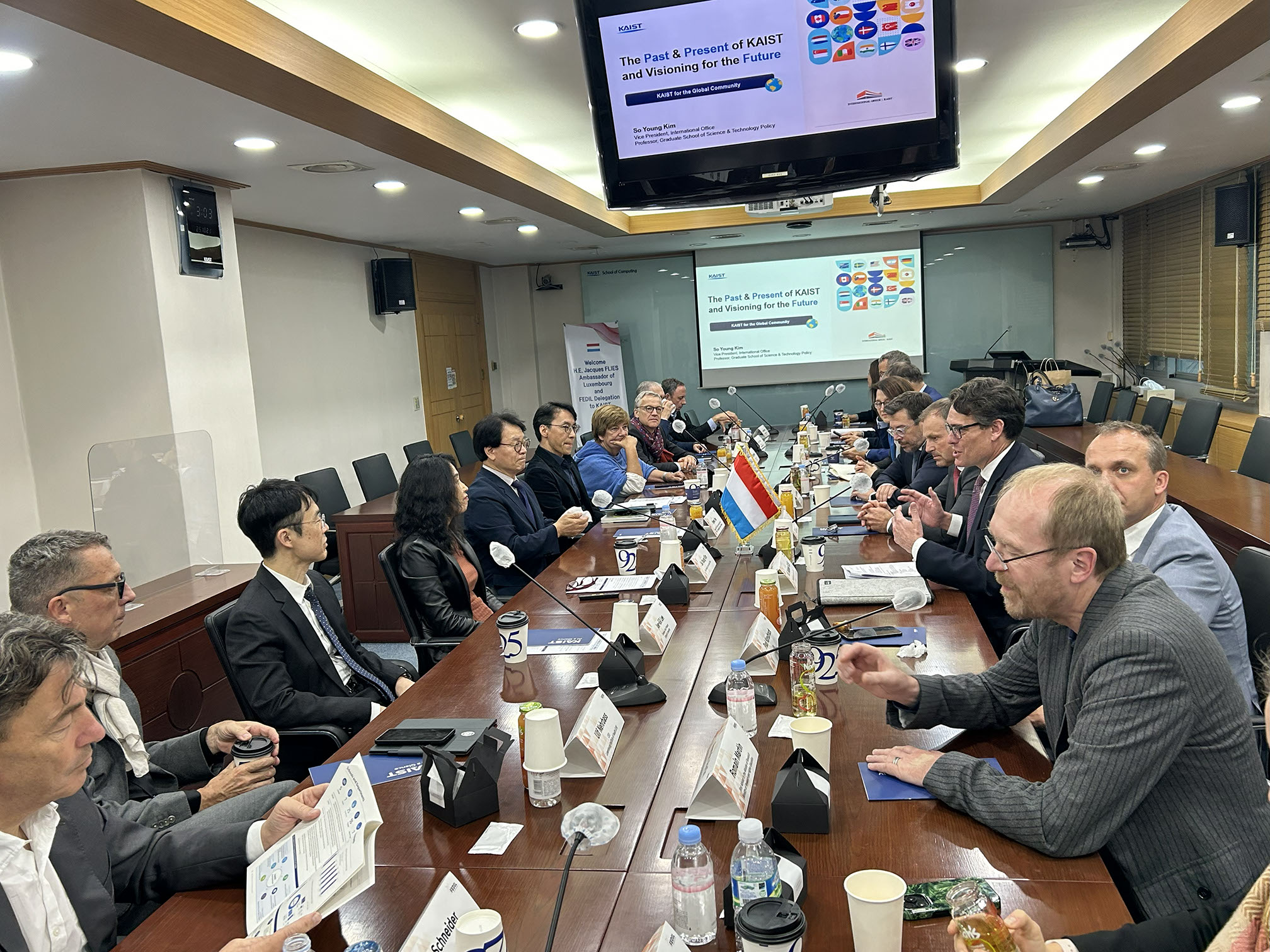
Following the visit to ETRI, the delegation continued its mission at the Korea Advanced Institute of Science and Technology (KAIST), South Korea’s leading research-driven university and a global benchmark in science and engineering. Established in 1971 as a national development project, KAIST now counts over 14,000 students and 1,600 faculty members, with alumni shaping Korea’s innovation ecosystem.
KAIST combines academic excellence with strong industry partnerships, a global vision and commitment to societal impact. Its strategy rests on three pillars: advancing science and technology to tackle global challenges, sharing expertise with developing nations, and fostering peace and prosperity worldwide through innovation.
At the core of this vision is the Institute of Technology Value Creation (ITVC), which bridges research, intellectual property, startups, and industry, creating a “technology-based virtuous ecosystem”.
The Industrial Liaison Platform (ILP) connects KAIST’s research and talent with industry needs and further strengthens ties with industry, offering tailored technical consulting and technology transfer to major corporations like LG Electronics and SMEs as well as.
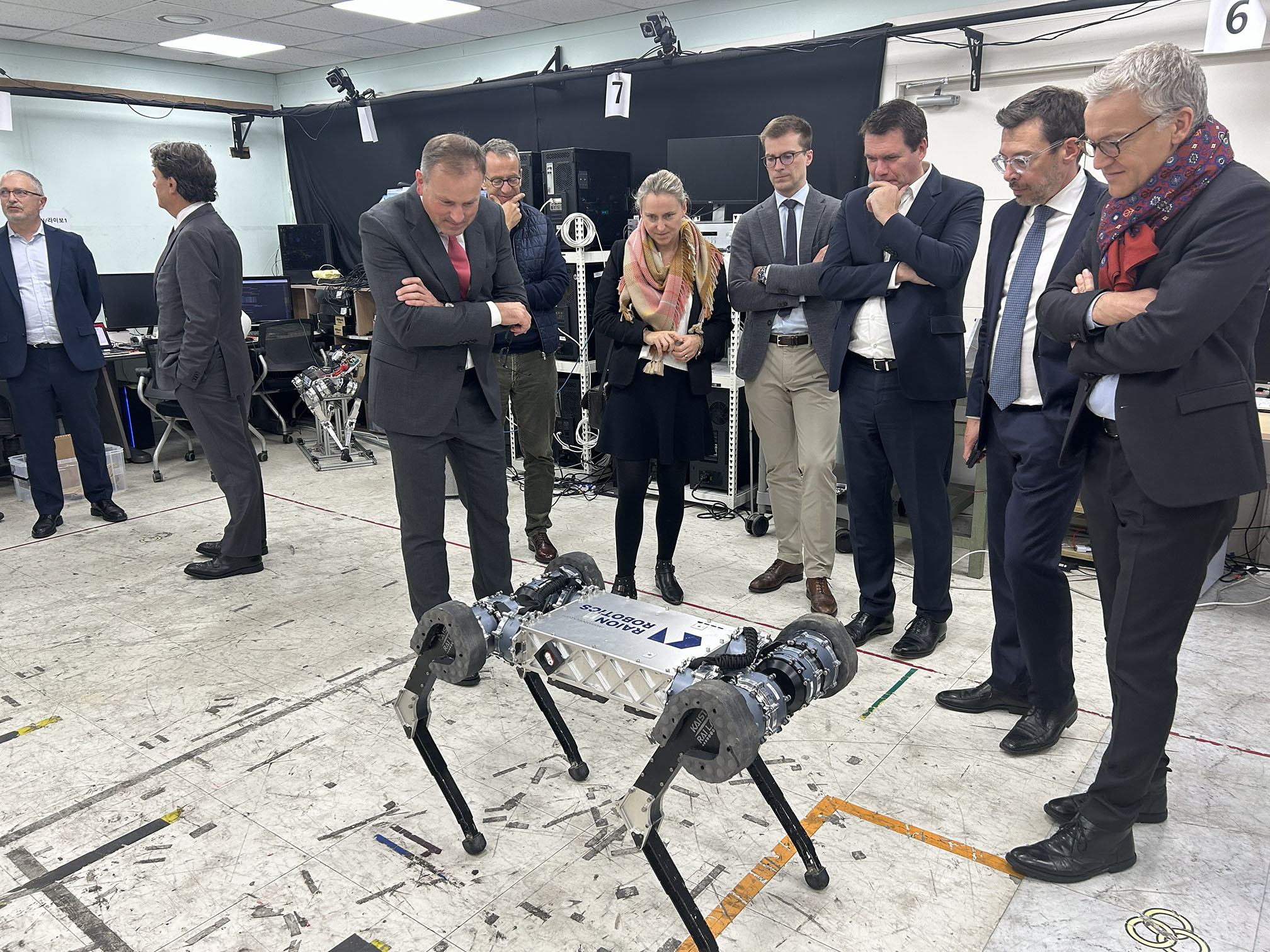
A highlight of the visit was the lab tour, where the delegation attended live demonstrations of KAIST projects in engineering, robotics, and computer science, including advanced autonomous robotic systems. This illustrated KAIST’s expertise in integrating AI with mechanical engineering to address real-world challenges. The demonstrations underscored the university’s role as a driver of next-generation technologies.
Advancing water management through AI at K-water
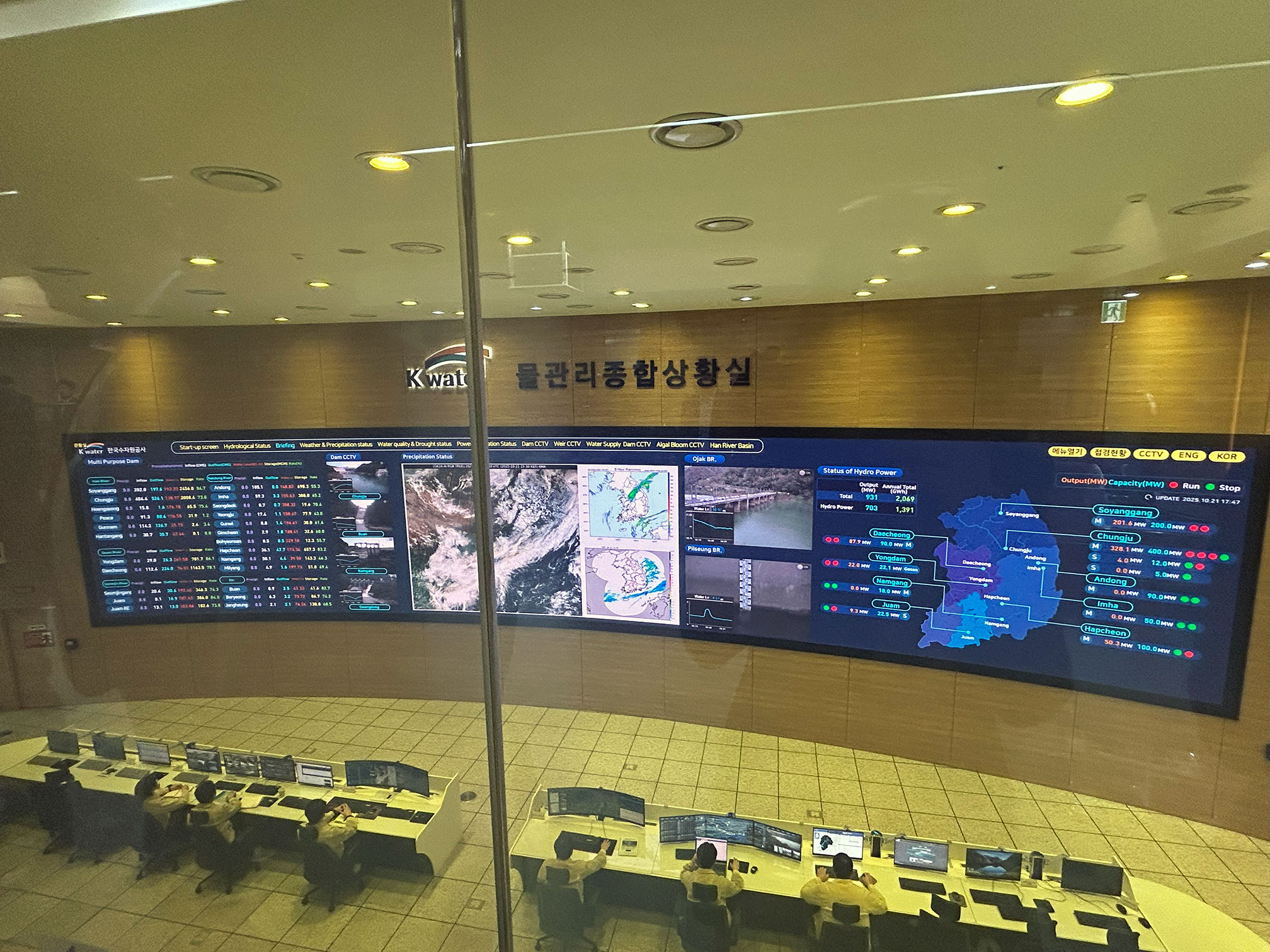
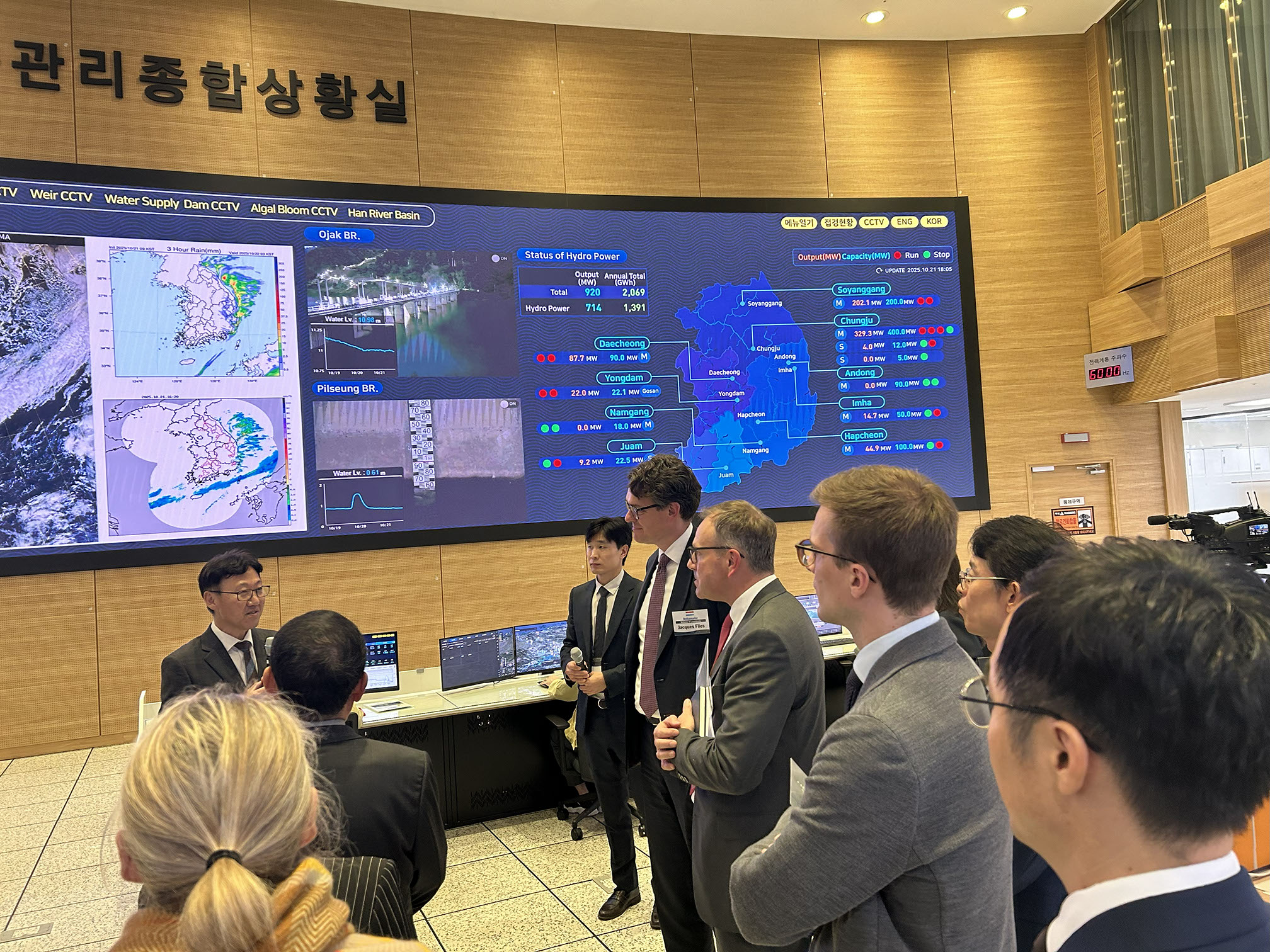
Founded in 1967, K-water is Korea’s premier public organization specializing in water resources management, both domestically and internationally. K-water has built a reputation for preventing water disasters and providing clean water through innovative technologies and integrated water resources management. Today, it oversees the entire water cycle, from flood control and water supply to renewable energy and smart city development, supplying over half of Korea’s national water needs and leading the country in renewable energy production.
K-water’s new vision is shaped by the accelerating global water crisis, driven by climate change, aging infrastructure, and the demands of high-tech industry. The organization is fast-tracking innovative solutions such as seawater desalination, ultrapure water, hydrothermal energy, green hydrogen, tidal power, and floating solar PV. These technologies are combined with digitalization and AI to enhance climate resilience and ensure sustainable water management.
K-water is setting new standards in smart water infrastructure through advanced digital and AI solutions. Its Digital GARAM+ platform creates a virtual twin of dam operations, enabling real-time monitoring, simulation, and data-driven decision-making. The organization is pioneering AI-powered water treatment plants with autonomous operation, intelligent energy management, and video-based safety systems, leveraging robotics and AI to deliver efficiency and eliminate human error. Complementing this, the Smart Water Network Management platform uses AI and IoT for predictive leakage detection, water quality control, and pressure optimization, ensuring rapid response to flooding and pollution risks.
K-water’s expertise extends beyond Korea, with operations in 48 countries and 181 investment and ODA projects. The organization is expanding its global R&D network, including partnerships in Luxembourg and other regions. K-water’s AI Data Center, currently under construction, will further advance its capabilities in superintelligent water management systems.
Day 3
Beyond industry: Luxembourg delegation’s visit to the Demilitarized Zone (DMZ)
Beyond industrial meetings, the Luxembourg delegation visited the Demilitarized Zone (DMZ) to gain insight into Korea’s complex history and security environment. Starting at Imjingak Park near Paju, the group explored symbolic landmarks such as the Freedom Bridge and Peace Bell, reminders of the Korean War and aspirations for reunification.
The program included the North Korea Experience Hall, featuring interactive exhibits and a live Q&A with a defector, offering a rare perspective on life under the regime. Delegates also toured the DMZ Theater, the 3rd Infiltration Tunnel – built for potential incursions – and the Dora Observatory, overlooking North Korean territory and the city of Gaeseong.
This visit provided a deeper understanding of the geopolitical realities shaping Korea’s development, underscoring the link between historical context and the country’s economic and technological progress.
Pioneering Generative AI for Industry and Society at LG AI Research Center
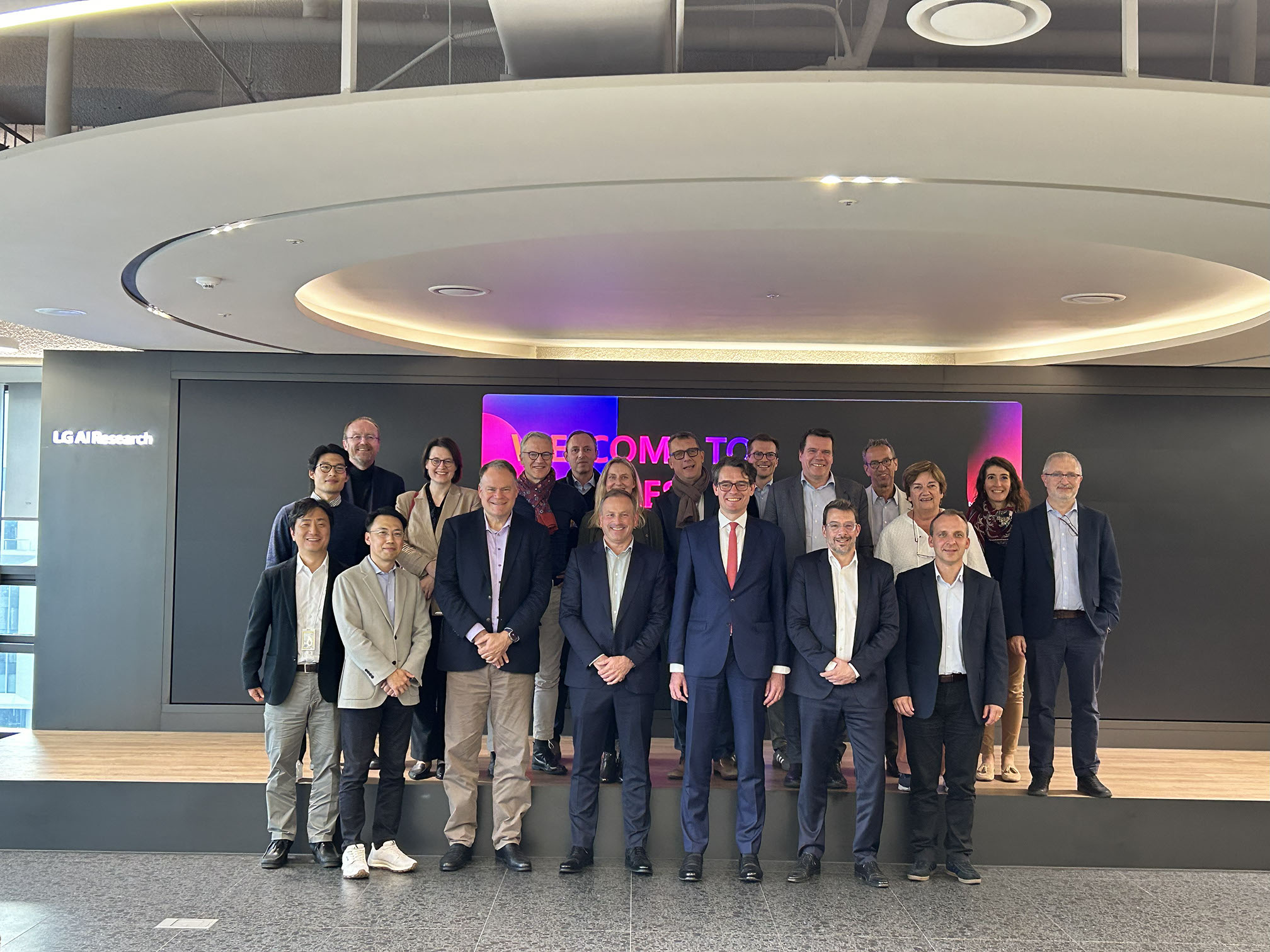
After a morning immersed in the history and symbolism of the DMZ, the delegation turned its attention to the future, visiting the LG AI Research Center, serving as the group’s dedicated think tank for artificial intelligence, with a mission to enhance LG’s capabilities, solve complex business challenges, and set ethical standards for AI development. This meeting offered a privileged look into how one of Korea’s most influential conglomerates is harnessing artificial intelligence to drive transformation across sectors, from manufacturing and materials to finance and healthcare.
Established in 2020, the center has rapidly scaled to over 300 experts, filed 200+ patents, and published 150+ papers, positioning LG as a leader in industrial and consumer AI applications.
LG’s vision “AI for a Better Life” drives transformation across manufacturing, materials, healthcare, and finance. The center’s eight labs focus on advanced machine learning, multimodal AI, materials intelligence, and bioinformatics, delivering solutions such as predictive battery analytics, AI-driven drug discovery, and automated quality control.
A highlight was EXAONE, LG’s proprietary large language model – the first bilingual, multimodal generative AI in Korea and now in its fourth generation. Open-sourced and globally recognized, EXAONE powers applications from compliance and document analysis to customer service and product innovation.
LG also showcased its commitment to responsible AI, with ethics principles embedded in every project and tools like NEXUS, a compliance agent ensuring data transparency and legal risk management.
The session concluded with a breakthrough in financial AI: the AI-Powered Equity Forecast Score, developed with London Stock Exchange Group (LSEG). The solution combines deep learning and large language models to deliver explainable, data-driven insights for asset managers. By integrating structured and unstructured data, such as real-time news, analyst reports, and company filings, the system generates daily forecast scores and commentary for thousands of US equities. Back-testing revealed portfolios using this tool outperformed benchmarks by over 35 percentage points, with improved risk management and transparency. Already powering products like the LQAI ETF on NYSE, this innovation signals new opportunities for Luxembourg’s financial sector in predictive analytics and risk management. The combination of predictive accuracy, explainability, and speed aligns perfectly with the needs of European asset managers navigating volatile markets and stringent regulatory environments.
As the delegation left LG Science Park, the message was clear: artificial intelligence is not just a technological trend for LG, but a strategic pillar for growth, competitiveness, and societal benefit.
South Korea – Luxembourg networking reception: Building bridges for innovation
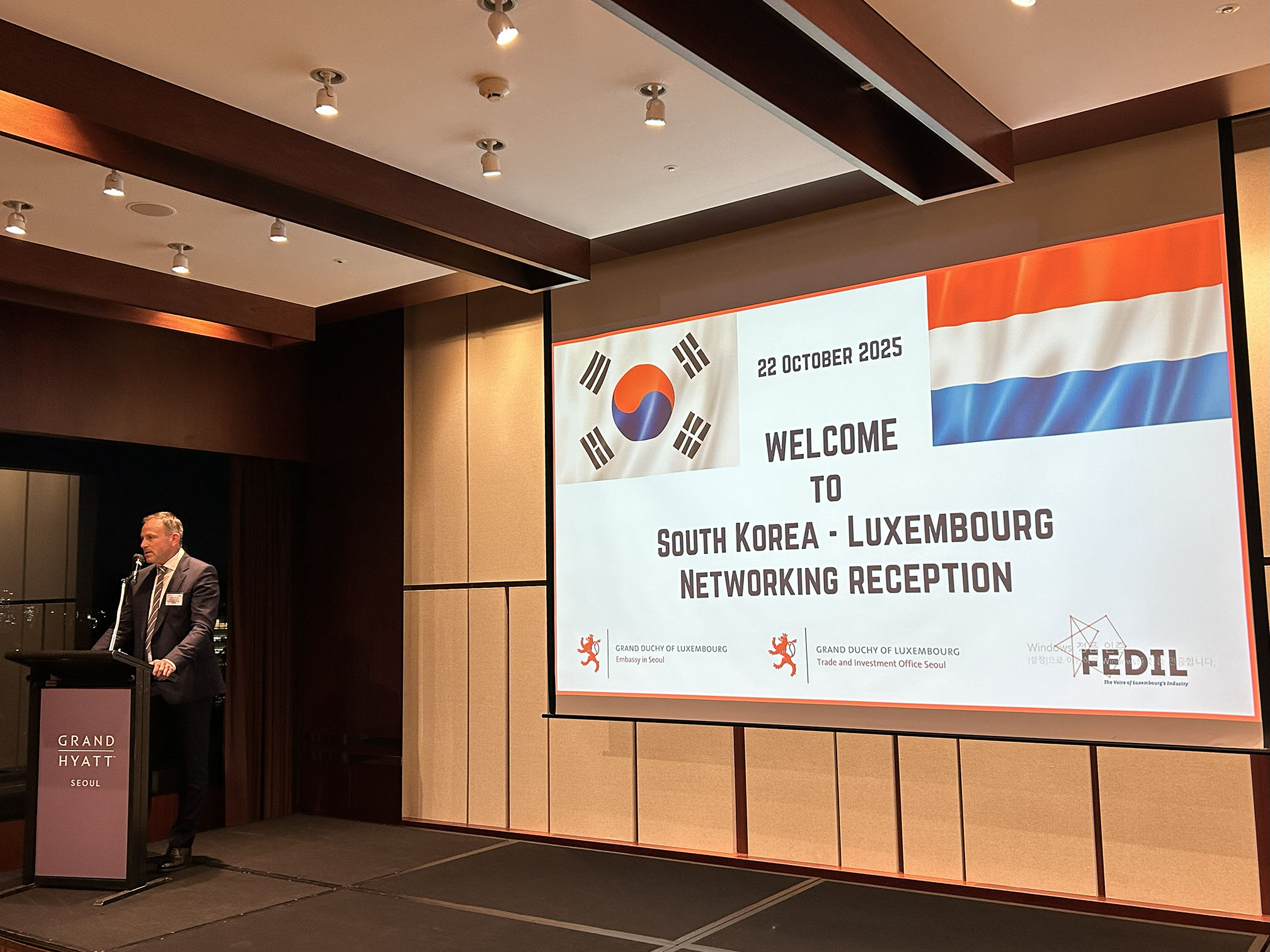
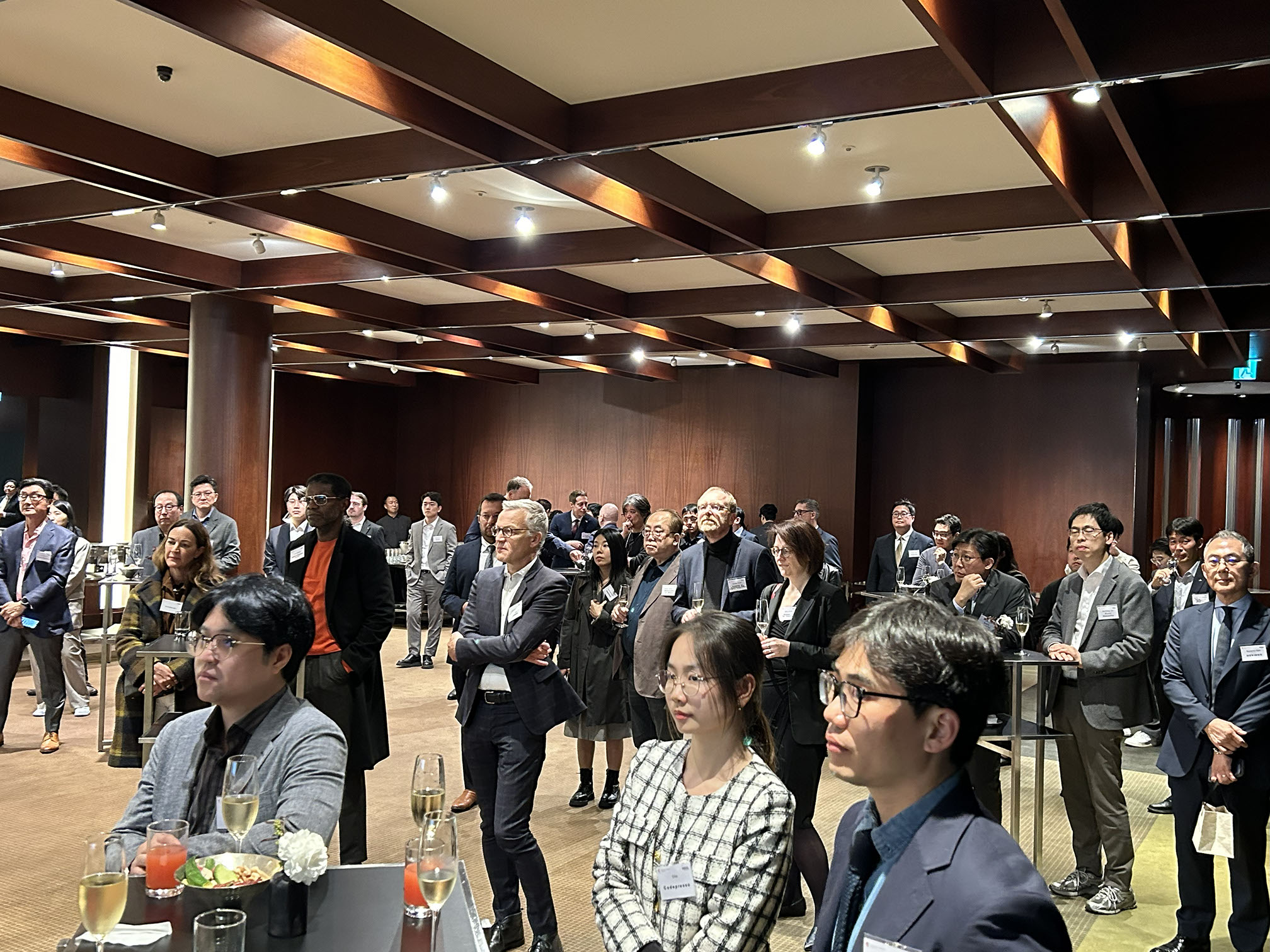
The final evening in Seoul featured a high-level networking reception at the Grand Hyatt, bringing together the FEDIL delegation, Korean business leaders, and key public and academic stakeholders. Against the backdrop of Seoul’s skyline, the event reinforced the strategic importance of Luxembourg–Korea cooperation in digital innovation, advanced industry, and entrepreneurship.
In his opening remarks, Jacques Flies, Ambassador of Luxembourg to the Republic of South Korea, emphasized the role of international partnerships in driving long-term growth. FEDIL Vice-Chairman, Alex Schumann echoed this vision, highlighting shared ambitions in technology, sustainability, and responsible innovation.
The reception marked the culmination of a week of productive meetings and technology showcases, underscoring Luxembourg’s commitment to building bridges with Korea across business and research.
FEDIL expressed its gratitude to the Ambassador and the Luxembourg Trade & Investment Office for their exceptional support and organization, which enabled a rich and insightful program showcasing Korea’s dynamism and innovative spirit.
Day 4
Beyond reality, shaping the metaverse of tomorrow at Lotte Caliverse
On the final day, the delegation met with the leadership of Lotte Caliverse, a flagship of Lotte Group’s digital transformation strategy. Presented at CES 2025, Caliverse is an advanced metaverse platform designed to merge commerce, entertainment, and social interaction in a creator-driven ecosystem.
The platform offers immersive shopping experiences using digital twins and realistic avatars, enabling virtual product trials before purchase. Beyond retail, Caliverse integrates interactive entertainment, including concerts, gaming tournaments, and global music events such as Tomorrowland Planet, which recreates iconic festival stages for digital performances.
By blending online and offline realities, Lotte Caliverse is redefining user engagement and opening new opportunities for virtual commerce and experiential marketing – positioning itself as a leader in next-generation digital ecosystems.
A highlight of the visit was the demonstration of Caliverse’s cutting-edge 3D technology. Built on Unreal Engine 5, the platform delivers hyper-real visuals, merging 3D environments with real-life characters in real time. The delegation experienced firsthand how Caliverse’s 3D screen protector transforms an ordinary smartphone into a vibrant hub of lifelike, three-dimensional content, no glasses required. With the Caliverse AI app, users can instantly convert their own photos and videos into 3D experiences, while also enjoying world-class entertainment such as K-pop performances directly from their devices. The demonstration of Caliverse 3D left a lasting impression, showcasing how advanced graphics, AI, and user-driven content can converge to create truly awe-inspiring digital experiences.
As the delegation concluded its visit, it was clear that Lotte Caliverse is not just building a virtual world, but pioneering a new paradigm for digital interaction, creativity, and commerce.
Luxembourg Innovation on the Global Stage: Data Design Engineering at KES 2025
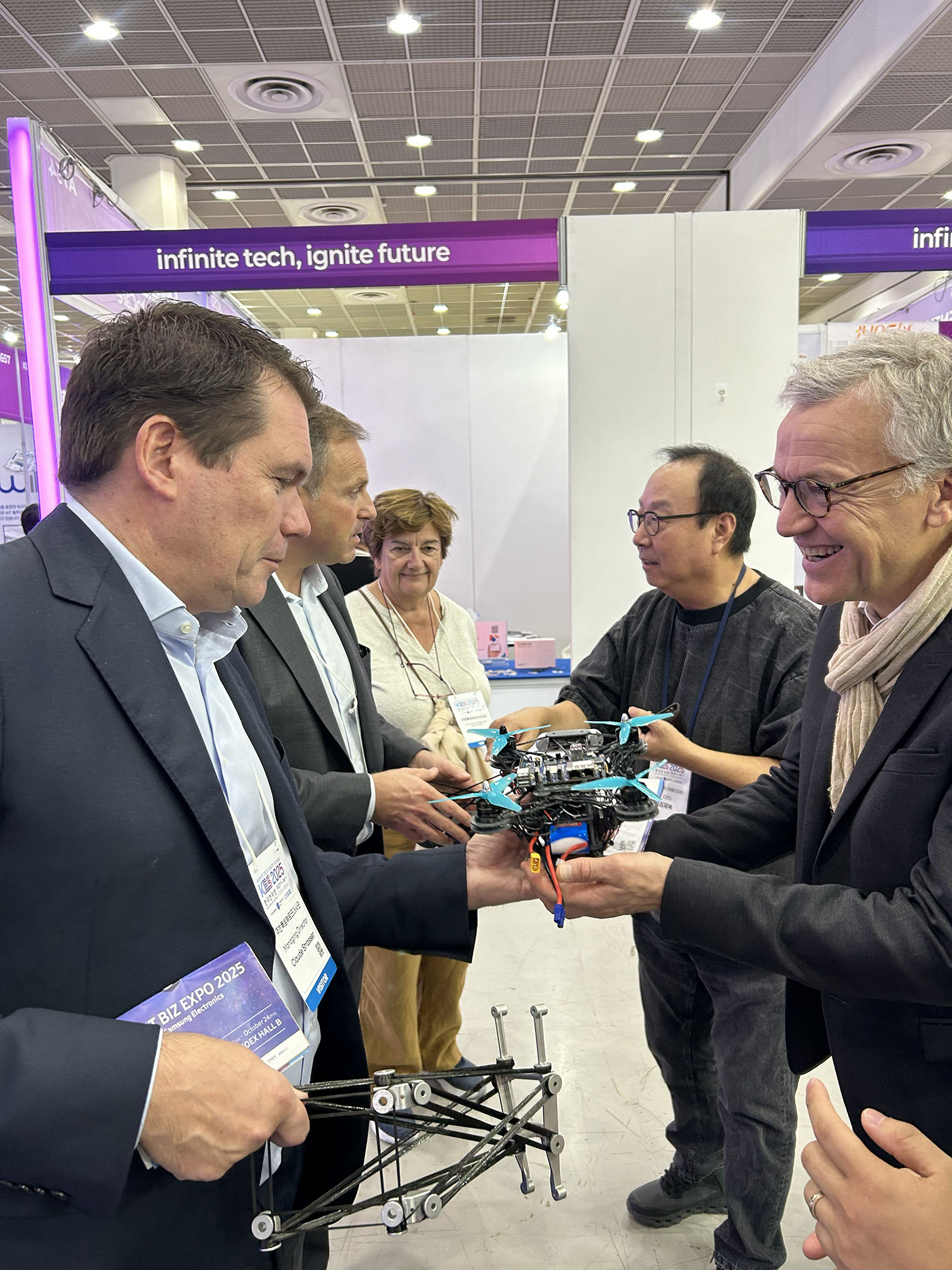
The delegation concluded its mission at Korea Electronics Show (KES) 2025, the country’s largest electronics and IT exhibition, showcasing global leaders like Samsung and LG alongside innovative SMEs and startups. This year’s themes including Smart Life, Mobility, Metaverse, and Sustainability, set the stage for forward-looking technologies.
A highlight was Data Design Engineering (DDE), a FEDIL member, whose booth attracted strong interest. Fresh from winning the AI Innovation Excellence Award in Luxembourg, DDE partnered with Gosung Engineering and GRADEL to present its AI Drone and demonstrate advanced autonomous solutions. The showcase featured ON Device Swarm AI, enabling drones, robots, and smart chairs to interact offline without internet access. Visitors experienced real-time scenarios, such as fire detection and emergency response, powered by a Vision-Language-Action (VLA) model.
DDE’s compact indoor drone impressed with its GPS-denied navigation, relying solely on vision-based object recognition and self-generated coordinates, a breakthrough for environments where GPS is unavailable or jammed. With exclusive business rights in Korea and Asia and plans for outdoor applications, DDE is positioning Luxembourg as a key player in AI and robotics.
The visit to KES underscored Luxembourg’s ability to compete globally in digital innovation and advanced engineering, closing a week of strategic exchanges and partnerships between Luxembourg and Korea.
Key Takeaways
- Federation of Korean Industries (FKI)
- The signing of the MoU between FEDIL and FKI lays the groundwork for sustained bilateral cooperation in advanced manufacturing, energy, logistics, and future industries.
- Korea’s economic transformation is driven by innovation but faces challenges such as demographic shifts and the need for regulatory reform.
- Korea’s new AI Basic Act demonstrates a pragmatic, innovation-friendly approach to AI governance, emphasizing transparency, accountability, and human oversight.
- Shinhan Diamond Industrial
- Precision manufacturing is being revolutionized by proprietary technologies like ARIX, enabling tailored performance and sustainability.
- Integration of AI into manufacturing processes (CMP, semiconductor tools) is accelerating efficiency and product quality.
- The M.AX ALLIANCE and AI Factory initiative illustrate Korea’s commitment to ethical, scalable AI adoption in industry.
- SKT AI Data Center Testbed & SK Telecom
- Korea is investing heavily in next-generation AI data centers, with SKT’s “AI Infrastructure Superhighway” and sovereign GPU clusters.
- Advanced cooling and energy efficiency are central to future-proofing AI infrastructure.
- The partnership between SK Telecom and Luxembourg opens new opportunities for collaboration in AI, data centers, and digital innovation.
- Electronics and Telecommunications Research Institute (ETRI)
- Fundamental research at ETRI translates into market-ready technologies through mission-oriented programs and close academia–industry collaboration.
- ETRI’s multidisciplinary teams are driving advances in smart cities, digital health, and autonomous mobility, with a strong commitment to open science and global standards.
- Korea Advanced Institute of Science and Technology (KAIST)
- KAIST’s “technology-based virtuous ecosystem” bridges research, startups, and industry, supporting deep-tech innovation in robotics, semiconductors, and biotech.
- The university’s global vision and societal impact are reflected in its support for developing countries and its leadership in patent filings.
- K-water
- Digitalisation and AI are underpinning smarter, more efficient water management – from predictive maintenance to real-time operations.
- Korea’s approach to utility management demonstrates the potential of AI for sustainability and operational excellence.
- K-water is actively engaged in an international collaborative project to strengthen climate resilience and advance digital water management, leveraging satellite and AI technologies. The initiative brings together partners from several European countries, including Luxembourg, with a local organization playing a coordinating role.
- Demilitarized Zone (DMZ)
- The DMZ visit provided historical and geopolitical context, highlighting the enduring legacy of conflict and aspirations for peace and reunification.
- Understanding Korea’s history is essential for appreciating the broader context in which industrial and technological progress unfolds.
- LG AI Research Center
- LG’s EXAONE model and AI-powered solutions are driving transformation across manufacturing, finance, and healthcare.
- Responsible AI development, with robust ethics and compliance frameworks, is a strategic priority for LG and a model for international collaboration.
- Generative AI is reshaping financial markets, offering predictive accuracy and transparency for asset managers.
- Lotte Caliverse
- The rise of immersive content and metaverse experiences is creating new vectors for customer engagement and digital commerce.
- Lotte Caliverse’s platform demonstrates the convergence of advanced graphics, AI, and user-driven content, pioneering new paradigms for interaction.
- Data Design Engineering at KES 2025
- Luxembourg’s innovation ecosystem is showcased on the global stage, with DDE’s AI Drone and Swarm AI technology leading advances in autonomous robotics.
- The demonstration of GPS-denied autonomous flight and ON Device Swarm AI highlights the potential for collaboration in AI and robotics between Luxembourg and Korea.