AI Survey 2026 reveals a more mature ecosystem, with rising adoption, measurable business value, and new scaling challenges
The transformative potential of Artificial Intelligence (AI) and Generative AI (GenAI) is reshaping industries globally, and Luxembourg is no exception. To better understand the specific impact, adoption patterns and evolution of these technologies within the Luxembourg industrial ecosystem, FEDIL, in collaboration with the Luxembourg AI Factory and Luxinnovation, conducted a comprehensive survey. This second survey sought to provide a clear and comparative view of how AI and GenAI adoption has evolved over the past year. It offers critical insights into the current landscape of AI and GenAI usage, the level of technological and organisational maturity reached by companies, the barriers and opportunities encountered, and the training, upskilling and funding needs required to strengthen competitiveness and drive innovation.
By gathering input from key stakeholders for the second consecutive year, the survey enables a robust year‑on‑year analysis, allowing us to concretely measure progress made, identify persistent or emerging challenges, and capture new trends shaping AI adoption in Luxembourg’s industry. This comparative approach is particularly valuable at a time when AI is reshaping markets at an unprecedented pace, while companies are moving from experimentation towards more structural and strategic deployment.
The results presented in this report offer a comprehensive and evidence‑based perspective on the industry’s journey towards AI integration. They not only help to better understand the real impact of AI on the Luxembourg ecosystem, but also highlight the collective effort required to drive innovation, advance workforce development, and shape policies that will ensure our industry’s prosperity in the age of AI.
Respondents profile
- The survey was conducted over a period of 6 weeks from 27 January 2026 to 13 March 2026.
- The total number of survey respondents is 136, a 20% rise compared to last year survey.
- The sectoral representation is distributed as follows:
- 6% Space & Defence (+3,5 pts vs. 2025)
- 5% Energy & Green-Tech (+2 pts vs. 2025)
- 9% Health & Wellbeing (+7 pts vs. 2025)
- 18% Manufacturing Industry (-10 pts vs. 2025)
- 21% Information & Communication Technologies (+5 pts vs. 2025)
- 9% Construction and construction-related industries (-4 pts vs. 2025)
- 4% Transport & Logistics (-7 pts vs. 2025)
- 7% Consulting and Advisory services (-2 pts vs. 2025)
- 1% Human Resources services (-3,5 pts vs. 2025)
- 20% Other service providers (+9 pts vs. 2025)
- In terms of company size at the site(s) in Luxembourg, the distribution is as follows:
- 27% 1-10 (+8 pts vs. 2025)
- 26% 10-50 (+13 pts vs. 2025)
- 13% 50-100 (-9 pts vs. 2025)
- 12% 100-250 (-3 pts vs. 2025)
- 10% 250-1000 (-13 pts vs. 2025)
- 12% 1000+ (+4 pts vs. 2025)
- The functions that responded to the survey were primarily top management (61% vs. 58% in 2025), followed by middle management (26% vs. 31% in 2025) and operations (13%).
Disclaimer: All comparisons between surveys conducted in 2025 and 2026 are to be read carefully, as the number and profiles of respondents are more diverse this year.
- The survey saw a 20% increase in participation and greater sectoral diversity.
- There was a significant shift in company size, with a notable increase in participation from smaller companies (1-50 employees) and a decrease from larger enterprises.
- The manufacturing sector’s representation dropped by 10 points, while ICT and other service providers saw an increase.
Definitions
The following definitions have been used to ensure a common understanding.
What is AI?
EU Artificial Intelligence Act’s (AI Act) definition: an ‘AI system’ is defined as « a machine-based system that is designed to operate with varying levels of autonomy and that may exhibit adaptiveness after deployment, and that, for explicit or implicit objectives, infers, from the input it receives, how to generate outputs such as predictions, content, recommendations, or decisions that can influence physical or virtual environments. »
What is GenAI?
World Economic Forum’s definition: « GenAI refers to a category of AI algorithms that generate new outputs including audio, code, images, text, simulations and videos, based on the data they have been trained on. »
Executive summary
Positive outlook
AI enters a phase of consolidation
The 2026 survey results point to a clear consolidation of AI and GenAI adoption across Luxembourg companies.
Artificial Intelligence is no longer approached as an experimental or exploratory technology, but increasingly as a practical business tool, embedded in day‑to‑day professional activities and broader digital transformation strategies.
Across sectors and company sizes, AI is primarily associated with productivity gains, process optimisation, efficiency improvements and operational performance. Expected benefits have stabilised compared to 2025, confirming a maturing mindset signalling that companies increasingly focus on tangible value rather than abstract potential. This evolution is mirrored by the nature of reported AI use cases, which have shifted decisively from pilots and proofs of concept towards pragmatic, low‑barrier and high‑impact applications, particularly in administrative, knowledge‑intensive and support functions. GenAI plays a central role in this transition by significantly reducing entry barriers and accelerating time‑to‑value.
Importantly, GenAI ease of access and immediate time‑to‑value have accelerated adoption across the organisation, making GenAI a mainstream productivity tool rather than a niche technology. Strategically, AI is now firmly anchored in broader digital transformation journeys. A large majority of organisations indicate that AI initiatives form part of broader transformation programmes, a pattern that remains stable compared to 2025. Larger organisations show a more structured and integrated approach, but the survey confirms that AI is no longer reserved for frontrunners or technology‑intensive sectors. Even when deployment remains gradual, especially in industrial environments, AI is increasingly treated as a long‑term strategic lever rather than a standalone technology.
At the same time, progress is visible on several structural dimensions. Skills shortages persist, but their intensity has decreased across nearly all categories, suggesting learning effects, internal capacity building and ecosystem maturation. Awareness of regulatory frameworks such as the AI Act is rising, and governance considerations are increasingly taken into account. Notably, companies have moved away from blocking GenAI tools, recognising their inevitability and value. Instead, AI and GenAI are widely perceived as opportunities, with confidence and acceptance now broadly shared across the business community.
Overall, the survey points to a positive and encouraging dynamic: confidence in AI is rising, adoption is expanding, and AI is progressively becoming an accepted and legitimate component of day‑to‑day business activity.
Challenges
Scaling, foundations and governance
Despite this positive momentum, the survey highlights a set of persistent and increasingly structural challenges that are now shaping the next phase of AI uptake.
The primary challenge has shifted from awareness to scaling. Cost has become a leading barrier in 2026, reflecting a maturity effect as companies move from pilots to industrialisation. While AI and GenAI are expected to generate efficiency gains and cost saving in the long run, organisations are now confronted with the total cost of ownership of AI, including data preparation, infrastructure, cybersecurity, governance frameworks and specialised skills. Budgetary constraints and uncertainty around return on investment continue to slow large‑scale deployment.
Data readiness remains a fundamental bottleneck. Although most companies have achieved a solid level of digital data collection, a significant gap persists between being data‑rich and being data‑driven. Only a minority of organisations systematically assess data quality, integrate data across systems or analyse it for decision‑making. This structural weakness contrasts with strong expectations around improved decision‑making and limits the scalability and reliability of AI solutions.
Skills represent another enduring constraint. Technical and data‑related competencies, machine learning, data analytics, software development, remain the most critical gaps. While fewer companies report acute shortages compared to 2025, a substantial proportion still lacks the expertise required to design, deploy and scale AI. This challenge is compounded by limited visibility of training and upskilling opportunities, particularly among smaller organisations.
Governance is emerging as a decisive issue. AI usage, especially GenAI, has become mainstream across organisations, but governance frameworks are not yet keeping pace. Many companies allow GenAI usage without having formal internal policies addressing data protection, security, compliance, acceptable use and human oversight. This creates a structural gap between acceptance and governance. While AI governance more broadly is progressing, GenAI‑specific rules remain under‑formalised.
While awareness of regulation has improved, notably with regard to the EU AI Act, translating regulatory principles into concrete, operational practices remains a challenge, especially for smaller organisations with limited internal capacity.
Finally, awareness and mobilisation of the AI ecosystem remain uneven. Companies demonstrate strong familiarity with technology providers, more moderate awareness of public and institutional support actors, and limited knowledge of concrete support mechanisms. Smaller organisations, in particular, continue to face structural constraints in accessing support, including limited internal capacity and visibility.
Conclusion
From adoption to sustainable AI integration
Taken together, the 2026 survey results confirm that Luxembourg companies have entered a new phase of AI adoption. The debate has clearly shifted away from experimentation and hype towards consolidation, value creation and strategic integration. AI and GenAI are now widely perceived as opportunities rather than threats, and their role in supporting productivity and competitiveness is broadly recognised.
However, the survey also delivers a clear and balanced message: AI impact is conditional. Sustainable and scalable value creation depends on companies’ ability to progress simultaneously on several fronts, including investment capacity, data maturity, skills development, governance and regulatory readiness. The key challenge is no longer to promote AI adoption itself, but to create the enabling conditions that allow AI to deliver long‑term benefits.
Addressing these challenges will require continued collaboration between companies, ecosystem actors and public stakeholders. Strengthening data foundations, supporting investment in scaling, improving governance practices and enhancing access to ecosystem support will be essential to ensure that AI contributes not only to short‑term efficiency gains, but also to long‑term competitiveness, resilience and trust across Luxembourg’s economy.
Assessment of the potential benefits by adopting AI technology
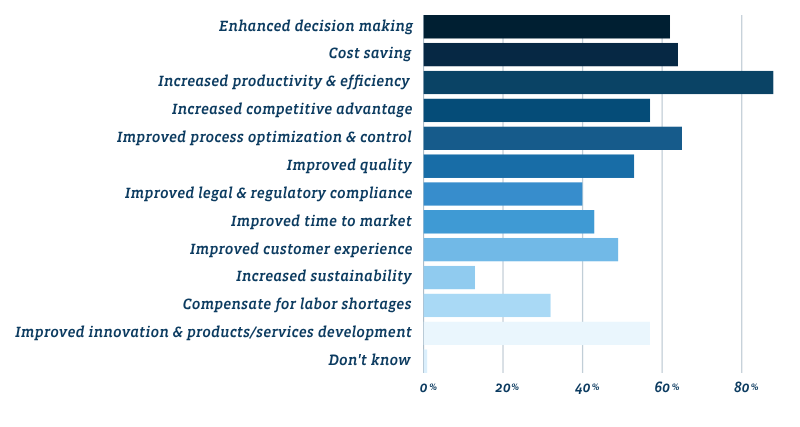
88% Respondents cite productivity and efficiency as the main expected benefits of AI.
2026: the maturing mindset year
From the outset, the survey sought to capture how companies assess the potential benefits of AI in order to establish a clear view of market expectations.
In 2026, expectations show stability rather than disruption, reflecting a clear consolidation in how Artificial Intelligence is perceived and positioned within organisations.
Despite a broader respondent base compared to 2025 and wider sectoral representation, the hierarchy of expected benefits remains stable and increasingly mature.
Artificial Intelligence is now overwhelmingly positioned as a productivity and efficiency enabler.
88 % of respondents identify increased productivity and efficiency as the primary expected benefit of AI adoption, confirming a decisive shift towards operational effectiveness rather than exploratory or experimental use. This orientation is further reinforced by the strong emphasis placed on improved process optimisation and control (65%) and cost savings (64%), underlining a pragmatic and business‑driven approach to AI.
At the same time, expectations around cost efficiency coexist with clear constraints on adoption. While AI is expected to generate significant savings over time, high upfront investment and uncertainty around return on investment continue to slow down deployment, particularly when moving beyond pilots towards broader implementation.
In conclusion, this data reflect a maturing mindset, with AI increasingly treated as a concrete business tool whose value is widely acknowledged, even if uncertainties related to cost and ROI continue to influence adoption dynamics.
Focus on the manufacturing sector
In the manufacturing sector, the perceived benefits of AI are particularly pronounced, with over 90% of respondents linking its adoption to gains in productivity and efficiency.
Cost saving continues to be a primary expected outcome, while the prevalence of labour shortages highlights AI’s role as a vital complement to the existing workforce rather than an immediate replacement.
At this stage, AI is viewed mainly as a lever for operational performance, with sustainability-related benefits remaining a less significant consideration for manufacturing companies. This positioning reflects a strong focus on efficiency, reliability and competitiveness in industrial environments.
Maturity level regarding the utilisation of AI technologies
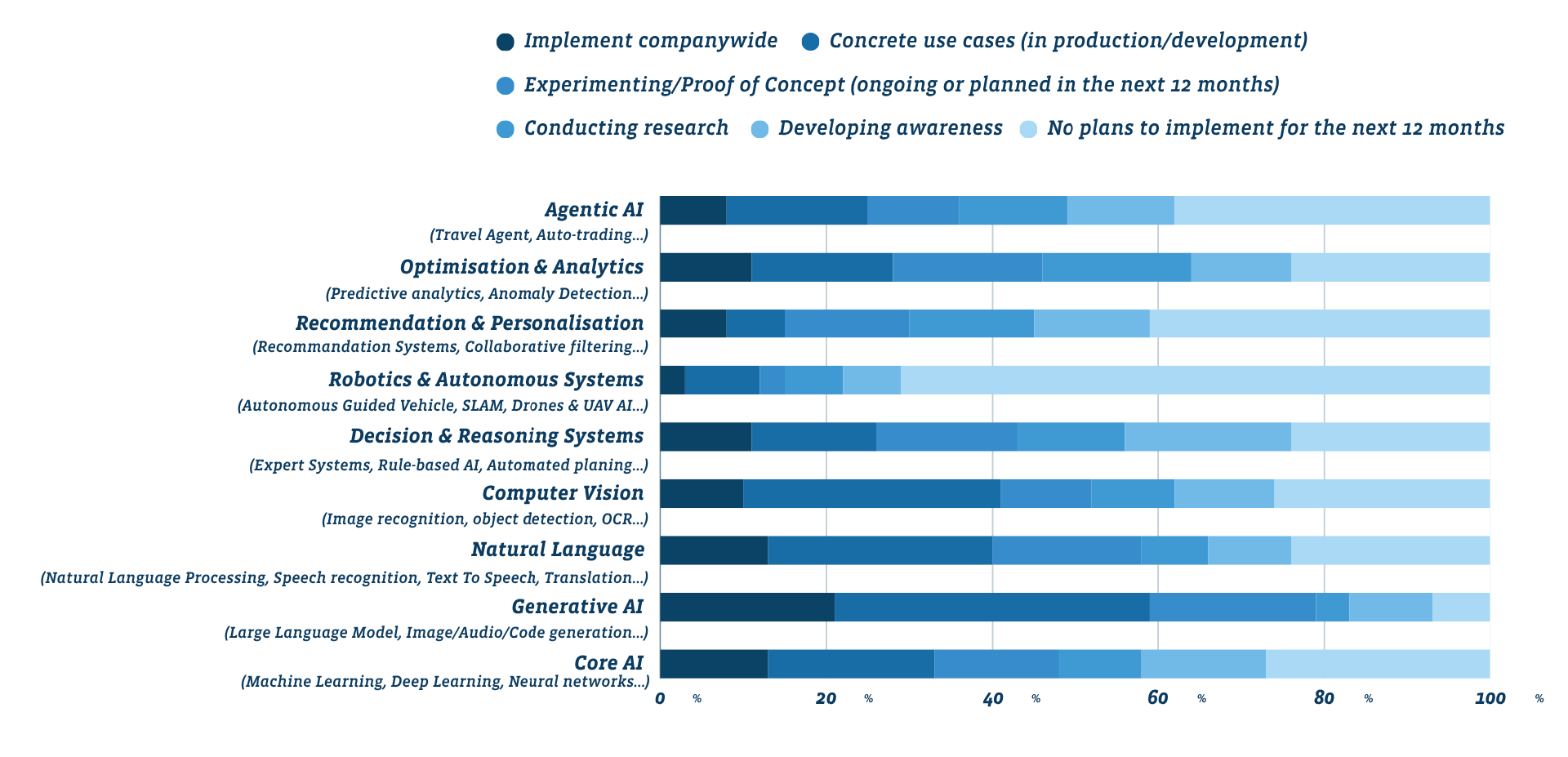
GenAI dominating, Agentic AI as the next frontier
GenAI clearly leads current adoption, while Agentic AI represents the next stage of the AI adoption curve.
Across the different AI technology families, engagement patterns reveal strong contrasts in maturity, adoption speed and strategic prioritisation within Luxembourg companies.
- Dominance of GenAI: GenAI stands out as the most rapidly and widely adopted technology, with a combined 59% of organisations having either implemented GenAI companywide or developed concrete use cases in production. This level of uptake significantly exceeds that of all other AI technologies. The very limited share of respondents reporting no plans to implement GenAI in the next 12 months (7%) further confirms its rapid diffusion and consolidation.
- Significant lag in Robotics: Robotics and Autonomous Systems remain a low priority, with 71% of respondents indicating no plans for implementation in the coming year. This positioning reflects either the niche market nature of these technologies or the substantial technical, financial and operational barriers associated with their deployment in the Luxembourg context.
- Polarisation in Core AI and NLP: Core AI, Natural Language and Computer Vision technologies display a polarised adoption profile. While a significant portion of respondents (25%) report no short‑term implementation plans, a comparable or larger share is already actively using or deploying these technologies. This pattern points to a clear divide between early adopters and laggards.
- Emerging technologies: Decision & Recommendation systems, Optimisation & Analytics and Agentic AI remain at early stages of the adoption curve. Most responses cluster around awareness‑building, research activities or the absence of concrete plans, indicating strong future potential but limited current deployment.
Key takeaways
Collectively, these observations confirm that Luxembourg companies are actively engaging with AI in a pragmatic and selective manner.
- GenAI and NLP have reached a level of maturity that enables rapid deployment and scaling.
- Traditional AI and analytics are progressing steadily but remain constrained by data maturity and integration challenges.
- Advanced or autonomous AI technologies are still confined to a limited group of frontrunners.
Adoption follows a pattern of experimentation and gradual consolidation rather than mass industrialisation across all AI technologies families. The main challenge is therefore no longer AI awareness, but scaling validated use cases, strengthening data foundations and building the necessary skills and governance to move from pilots to structural deployment.
Focus on the manufacturing sector
The manufacturing sector follows a more progressive adoption curve with 42% of respondents declaring not having plans to implement AI technologies for the next 12 months.
This more cautious adoption pace does not reflect a lack of strategic intent, but rather the higher complexity, integration constraints and ROI requirements typically associated with industrial and OT environments.
Integrating AI initiatives into the digital transformation journey
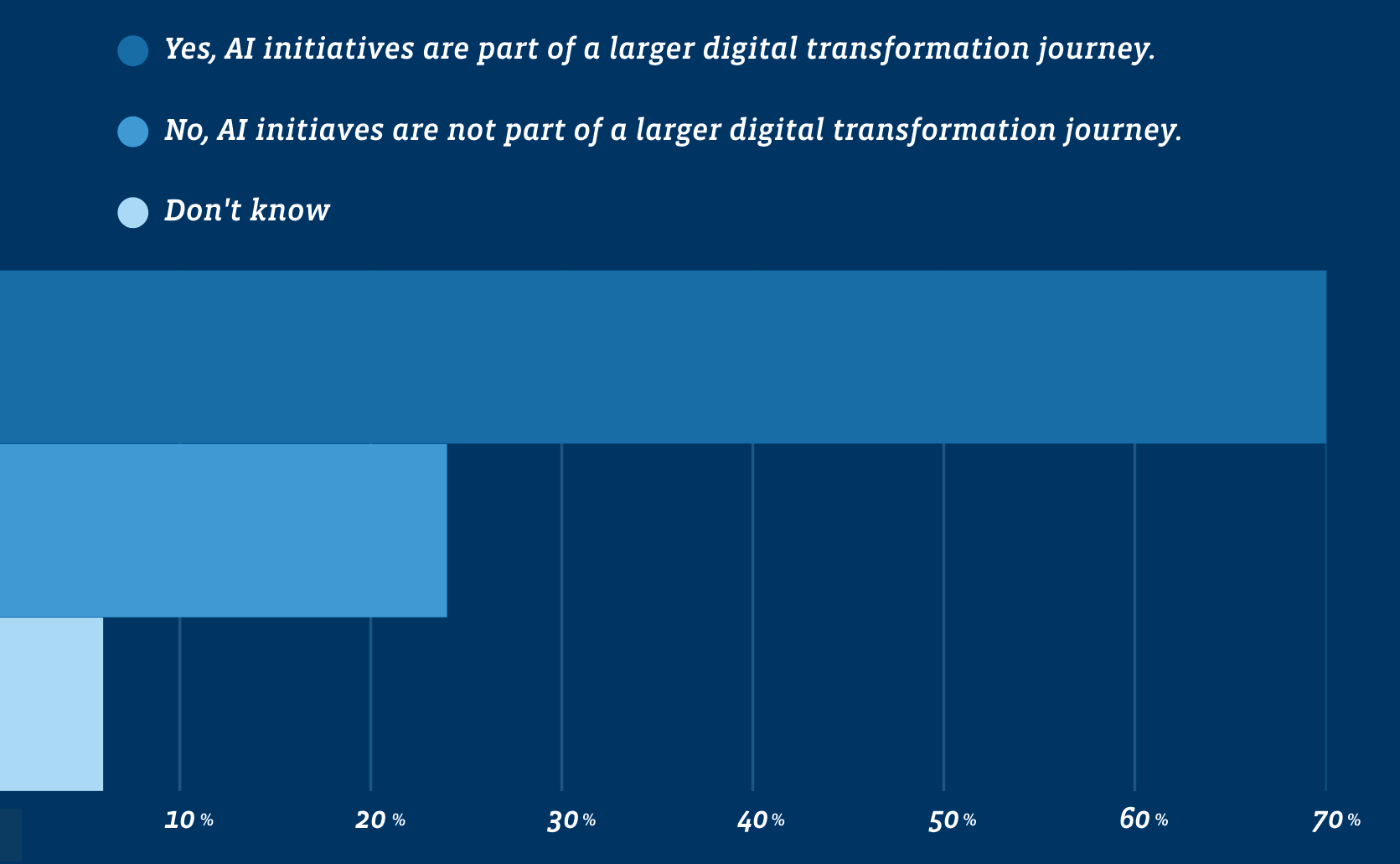
AI as a structural and strategic component of digital transformation
A clear majority of organisations, representing 70% of respondents, report that their AI initiatives form part of a broader digital transformation journey. This confirms that AI is largely and firmly positioned as a structural and strategic component of long‑term organisational change and digital transformation journey across Luxembourg companies, rather than as a standalone or opportunistic technology. Compared to 2025, no significant shift is observed, confirming the stability and consolidation of this strategic positioning. Company size plays also a decisive role: the larger the organisation, the more systematically AI is embedded within a comprehensive digital transformation strategy. Larger companies tend to rely on more structured and integrated approaches to AI, often aligned with established digital roadmaps and formal transformation programmes.
Interestingly, the integration of AI into digital transformation strategies remains highly sector‑dependent. Sectors characterised by higher level of digital maturity or stronger competitive and regulatory pressures, such as ICT, Space & Defense and Energy, more consistently position AI within overarching transformation frameworks. Other sectors continue to adopt more targeted or incremental approaches, reflecting differences in digital readiness and organisational constraints.
Comprehensively, AI is widely regarded as a strategic priority and is being thoughtfully integrated into broader business evolution processes. The consistency of results between 2025 and 2026 confirms that this approach is now well established and structurally anchored within the Luxembourg industrial ecosystem.
Focus on the manufacturing sector
Within the manufacturing sector, AI initiatives are strongly anchored in broader digital transformation journeys. This strategic integration should be read in complementarity with the more gradual deployment observed at technological level, reflecting the specific constraints of industrial environments. Manufacturing companies overwhelmingly associate AI with wider transformation programmes linked to Industry 4.0, automation, data‑driven production and digital operating models. While the sector demonstrates a clear strategic commitment to AI, its adoption curve remains more progressive than in digitally native sectors such as ICT, as already highlighted in the previous analysis.
AI governance policy
It’s time for governance
AI governance is increasingly moving to the forefront of corporate priorities, although formalisation still lags behind actual adoption.
In 2026, 48% of respondents report having an AI governance policy in place, reflecting a growing recognition that governance is an essential component of AI technologies deployment, particularly in a regulatory and risk‑aware environments. These figures refer to AI governance in a broad sense and should be clearly distinguished from more specific policies addressing the use of GenAI tools.
At the same time, a very similar portion (46%) of organisations state that they do not yet have an AI governance policy, while approximately 6% remain unsure. This distribution points to a transition phase: AI is already being used or actively explored by many organisations, as evidenced earlier in the survey, yet governance frameworks have not systematically kept pace. Importantly, rather than signalling resistance or lack of awareness, this gap suggests that many companies are still in the process of structuring and formalising their governance approach.
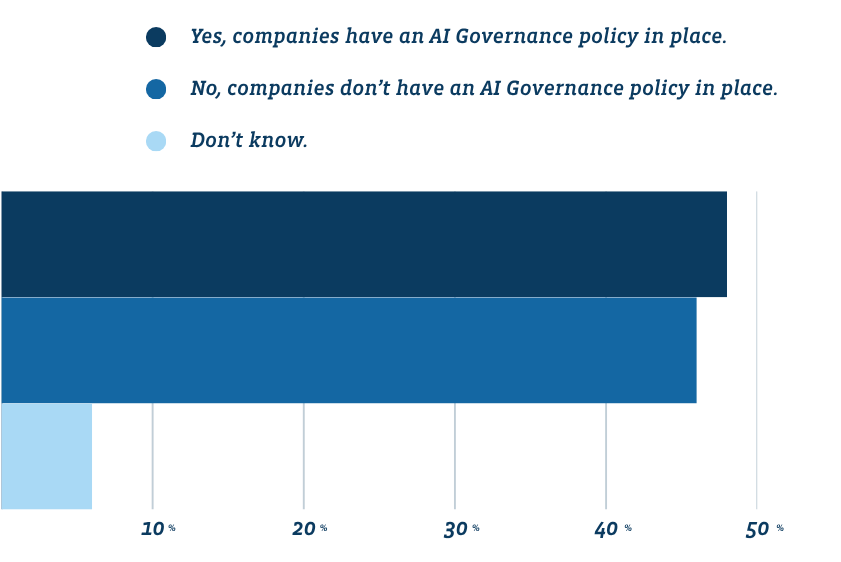
48% have an AI Governance policy
GenAI as a key trigger for governance urgency
GenAI has emerged as a powerful accelerator and stress test for existing governance frameworks.
The rapid diffusion of public and easily accessible GenAI tools has amplified the need to make organisations aware of the risks related to data protection, confidentiality, intellectual property, compliance and security when usage remains unmanaged. At the same time, as highlighted throughout the survey, GenAI delivers significant human productivity gains, particularly in knowledge‑intensive activities, IP, compliance and security, reinforcing its rapid uptake across organisations.
Between 2025 and 2026, blocking or prohibiting GenAI tools is no longer perceived as a viable option. Instead, companies increasingly recognise that value lies in guiding, framing and governing usage, rather than attempting to suppress it. This evolution marks a shift from reactive control to structured and sustainable governance, positioning AI and GenAI as technologies to be managed strategically rather than restricted defensively.
Assessment of data maturity for AI adoption
From Data-rich to Data-driven
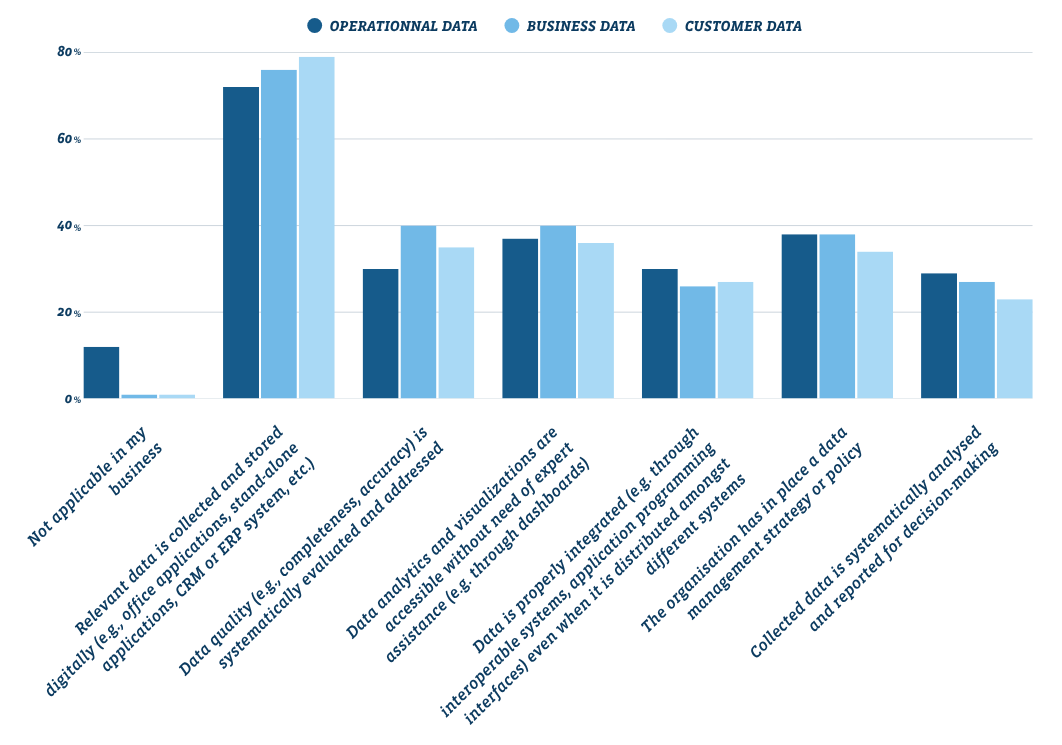
When asking the respondents to assess their level of maturity regarding different kind of data, the results display a structural gap between data collection and data readiness for AI across all domains.
While most organisations have made significant progress in recording and storing data, far fewer have put in place the foundations required to use data reliably, consistently and safely for AI‑driven decision‑making.
Key takeaways
- A strong digital baseline: The overwhelming majority of companies in Luxembourg are proficient at the foundational step of data maturity: collecting and storing data digitally. The figures are consistently high across Operational (72%), Business (76%), and Customer (79%) domains, reflecting a solid baseline of digitalisation.
- The « Maturity Cliff »: A sharp drop of 30 to 50 percentage points separates basic data collection from more advanced practices such as data governance and analytics. For example, while 79% collect customer data, only 35% systematically evaluate its quality, and merely 23% systematically analyse it for decision-making. This gap represents a critical bottleneck in the transition from being data-rich to becoming data-driven.
- A polarised landscape: The data suggests a polarisation between companies that have mastered basic digitalisation and those that are leveraging data as a strategic asset. A significant portion of the ecosystem has not yet progressed beyond the first phase, unable to translate data availability into actionable insights
- Low-response categories: The lowest-scoring item is the systematic analysis of data for decision-making, particularly for customer data (23%). This is a crucial gap, as it suggests that the collected data is not being fully exploited to generate business value, improve customer experience, or optimise operations. Similarly, data integration also scores low (26-30%), pointing to the persistence of data silos.
Road to AI
Building the foundations for trustworthy and effective AI
AI is only as good as the data it relies on.
Before scaling AI, organisations must secure their data foundations.
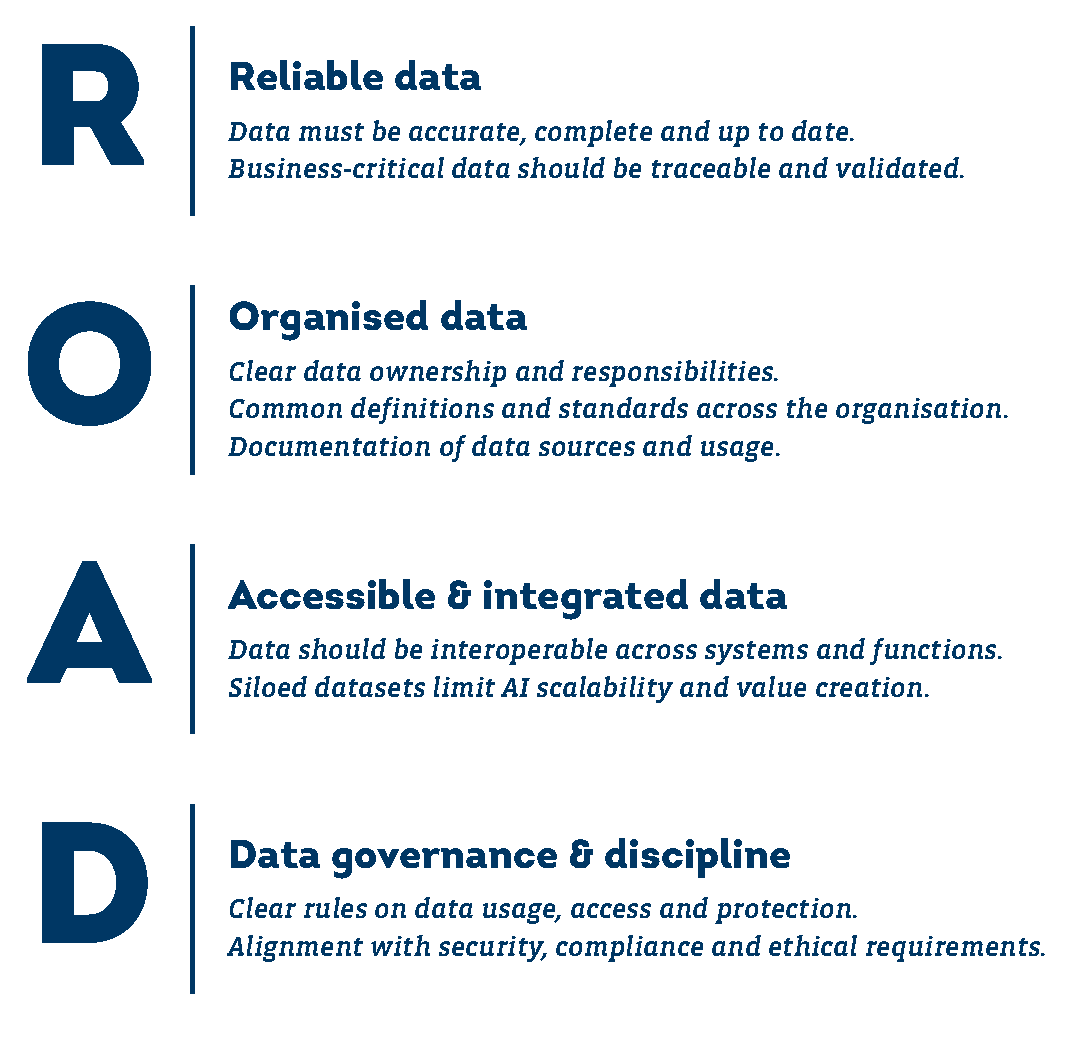 ROAD to AI means moving from data accumulation to data mastery.
Without solid data foundations, AI may accelerate wrong conclusions instead of better decisions.
Tips to perform meaningful data analysis
- Start with simple, well‑defined use cases before scaling.
- Focus on data quality improvements before model sophistication.
- Regularly question data assumptions and limitations.
- Combine technical analysis with business interpretation.
- Treat data and AI as learning processes, not one‑off projects.
Top challenges to be overcome for adopting AI
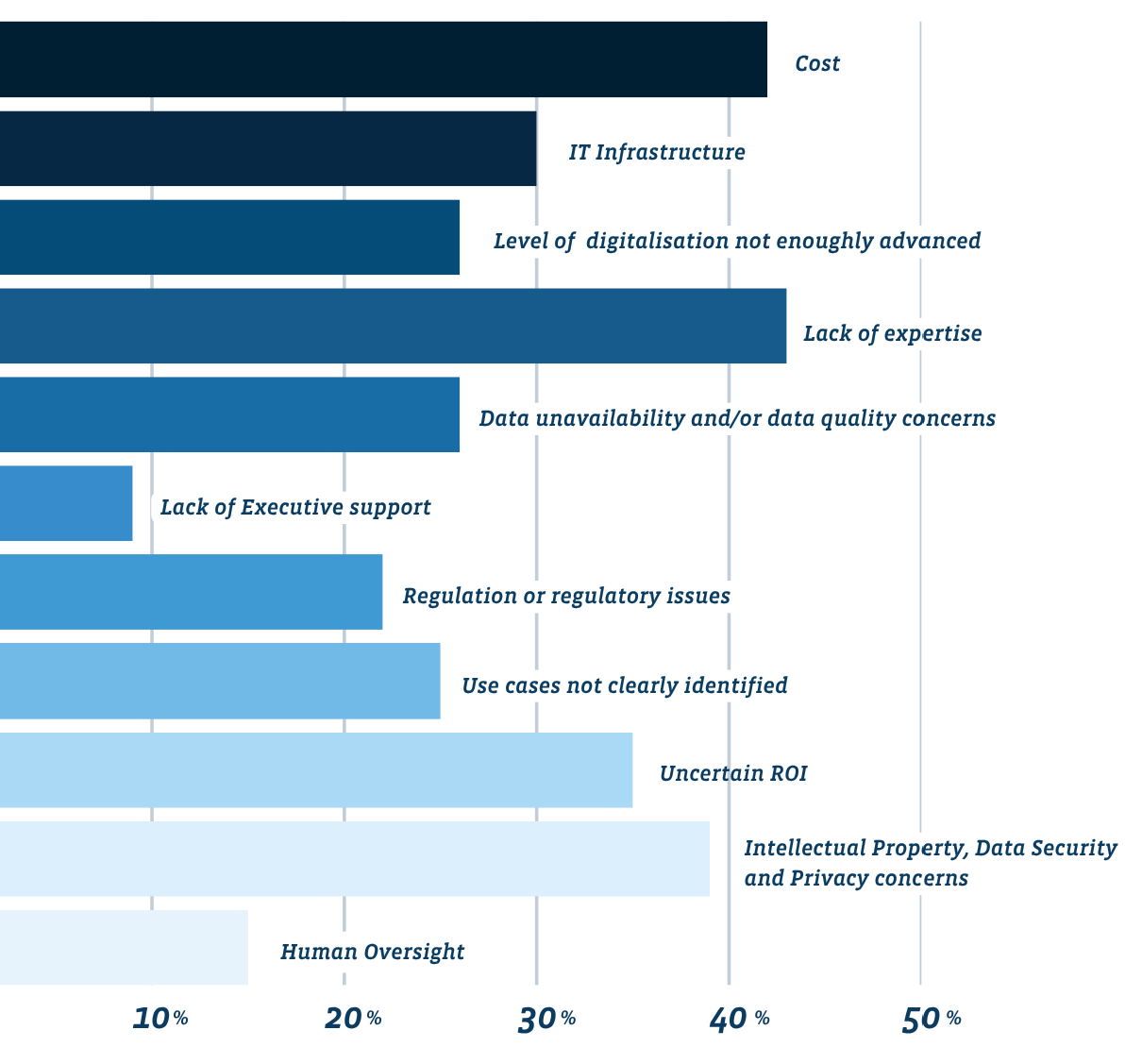
Structural barriers holding AI back to scale
The barriers to AI adoption identified in 2026 show strong continuity with those observed in 2025. The main obstacles are no longer related to lack of interest or awareness, but to structural and foundational constraints that continue to hinder large‑scale deployment.
A persistent lack of expertise remains the most significant challenge. Despite the growing number of pilot projects, many organisations still face difficulties in accessing or developing skills in data analytics, AI engineering and change management. Skills availability therefore continues to act as a critical bottleneck for scaling AI initiatives.
What alternative approach to this? (read the box below)
At the same time, cost has gained prominence as a barrier compared to 2025, reflecting a clear maturity effect. As companies move from pilots to industrialisation, decision‑makers develop a more realistic understanding of the total cost of ownership of AI, encompassing data preparation, IT infrastructure, cloud or local hosting, cybersecurity, governance frameworks and specialised skills.
In parallel, insufficient levels of digitalisation and data‑related constraints remain major impediments, reinforcing earlier findings on data readiness. These limitations continue to restrict the ability to deploy AI solutions reliably and at scale.
While AI’s potential is increasingly well understood, uncertainty around ROI and difficulties in identifying high‑value use cases still constrain adoption. Many organisations struggle to prioritise applications with clear business impact and to build robust, evidence‑based business cases.
Concerns related to intellectual property, data security and privacy have become embedded constraints, further amplified by the rapid diffusion of GenAI. These issues, combined with questions of human oversight and organisational readiness, continue to shape adoption decisions.
Taken together, the comparison between 2025 and 2026 points to a stabilisation of barriers, rather than their resolution. The challenge for companies has shifted from discovering AI to creating the enabling conditions, skills, digital maturity, data readiness and governance, required for sustainable and scalable deployment.
Leveraging the ecosystem to overcome expertise constraints
The challenge lies in the breadth of specialised knowledge required and the unprecedented speed at which AI technologies evolve. Developing and maintaining cutting‑edge expertise across all relevant domains is no longer realistic for individual organisations. In this context, external collaboration becomes a strategic necessity. Companies that engage more deeply with the innovation ecosystem consistently display higher levels of AI maturity, highlighting the value of partnerships, knowledge sharing and ecosystem‑driven support.
Corporate functions adopting AI
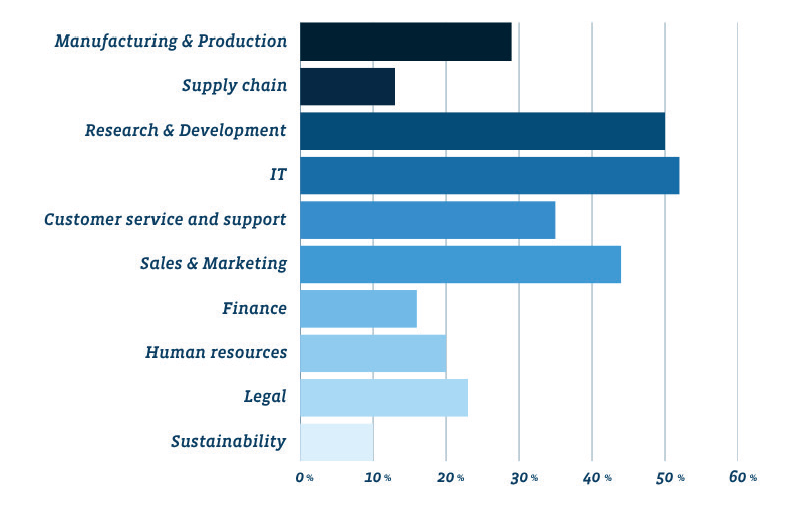
Function-driven AI adoption: where value comes first
The survey findings indicate that AI adoption within organisations exhibits a gradual and function-driven diffusion pattern, as opposed to a simultaneous, enterprise-wide implementation.
AI adoption is most advanced in functions where productivity gains are immediate, experimentation is relatively straightforward, and risks remain contained
Consistent with the previous year’s results, IT and digital functions are at the forefront of AI adoption. These functions serve as enablers, possessing the requisite technical skills, infrastructure control, and responsibility for system integration.
Since last year, AI adoption has also further expanded across knowledge‑intensive support functions including marketing and communication, HR, finance and customer‑facing activities. In these areas, AI, particularly GenAI, is primarily mobilised as a productivity‑enhancing tool.
By contrast, operational and core business functions show a more selective adoption profile. Operations, production, logistics and supply‑chain functions increasingly rely on AI for predictive, optimisation and quality‑related use cases, typically when data availability and integration levels are sufficiently mature. In these functions, adoption is less exploratory and more directly tied to measurable business impact.
Compared with the 2025 survey, the 2026 results do not indicate a radical redistribution of AI adoption across corporate functions, but rather a broadening and deepening of existing patterns.
In 2025, AI adoption remained largely concentrated within IT, data and selected operational functions, with limited spill‑over into support functions.
In 2026, while these core functions remain leading adopters, AI usage has expanded more visibly across business support and transversal functions, largely driven by the widespread availability of GenAI tools.
More broadly, the comparison highlights a progressive normalised AI usage across functions, following a bottom-up logic cantered on value creation rather than a top‑down transformation. AI is increasingly emerging first where it delivers immediate value, with GenAI acting as a transversal accelerator, while structural constraints identified earlier, particularly skills, data readiness and governance, continue to shape both the pace and scope of adoption.
AI use cases: Emerging trends and insights
From hype to impact: AI’s shift to practical value
The use cases described by respondents in 2026 illustrate a clear shift from exploratory or experimental pilots towards practical, operational and productivity‑oriented applications.
AI is no longer primarily tested for its technological novelty, but increasingly deployed to support concrete business activities, often with limited complexity and rapid time‑to‑value.
- Automation of administrative and knowledge‑intensive tasks: A first dominant group of use cases relates the automation of administrative and knowledge‑intensive tasks. Many organisations report using AI, particularly GenAI tools, for document drafting, summarisation, classification and analysis. Typical applications include the preparation of reports, emails, contracts, technical documentation, internal procedures and compliance‑related documents. These use cases are widely adopted across functions and sectors, as they directly enhance individual productivity gains with relatively low implementation effort.
- AI‑powered chatbots and virtual assistants: A second recurring category concerns the use of AI‑powered chatbots and virtual assistants, deployed both internally and externally. Internally, chatbots are used to support employees through IT helpdesks, HR services, onboarding processes, training support or internal knowledge management. Externally, they are increasingly mobilised for customer service and first‑line support, helping organisations to handle recurrent requests, improve responsiveness and reduce workload on human teams.
- Translation and multilingual content generation: Another frequently mentioned group of use cases features translation and multilingual content generation, particularly in international or multilingual environments. AI is used to translate technical documentation, marketing content, internal communications and operational guidelines, thereby supporting cross‑border collaboration and standardisation.
- Process optimisation, analytics and decision support: Beyond productivity‑oriented applications, another major family of use cases relates to process optimisation, analytics and decision support. Reported use cases include forecasting, predictive maintenance, quality monitoring, anomaly detection, demand prediction and operational optimisation. These applications typically rely on structured data and are more prevalent in organisations that have already invested in data integration and analytics capabilities.
- Support for R&D, product development and engineering: Finally, a more limited but recurrent set of responses refers to AI support for R&D, product development and engineering, including simulation, design optimisation, code assistance and testing automation. These use cases are generally more advanced and concentrated among organisations with higher digital and data maturity.
Key evolution trends since 2025
Compared to the 2025 edition, AI use cases have clearly matured. Last year responses were often framed around exploratory initiatives or pilot projects and a significant share of respondents indicated difficulties in identifying concrete AI applications. By contrast, in 2026, the diversity and concreteness of reported use cases suggest that organisations now have a sharper understanding of where AI creates tangible value. This evolution is reinforced by the marked decline of “use cases not clearly identified” as a barrier, as observed in the analysis of adoption constraints.
Another notable evolution is the prominence of GenAI‑driven productivity use cases in 2026. Although already present in 2025, GenAI use has clearly intensified and spread across functions. Organisations increasingly recognise AI’s ability to deliver immediate productivity gains, even without deep technical integration or complex data pipelines.
At the same time, more advanced and data‑driven industrial use cases continue to expand, but at a more gradual pace, reflecting ongoing constraints related to data quality, integration, governance and ROI.
Key takeaways
The provided use cases confirm that AI adoption in 2026 is firmly anchored in practical value creation. Organisations are moving away from abstract experimentation and focusing on use cases that enhance productivity, support decision‑making and optimise processes. GenAI acts as a powerful accelerator by lowering entry barriers, while more advanced industrial and analytical use cases continue to depend on data maturity and integration capabilities.
The findings illustrate a pragmatic and learning‑driven adoption trajectory, where AI is increasingly perceived as a tool to support everyday business activities rather than as a standalone innovation project.
Tangible and perceived benefits of AI adoption in companies: trends and insights
Productivity gains and quality as a major adoption driver
We asked the respondents to explain the benefits that AI has brought to their companies when implemented.
The feedback provided in 2026 indicates that AI has generally delivered tangible and measurable benefits to organisations, with a strong emphasis on efficiency, productivity and time savings. A clear majority of respondents report that AI has either met or exceeded their initial expectations, particularly for use cases that were well scoped and aligned with operational needs.
- Productivity gains and time savings: A first recurring theme relates to productivity gains and time savings. Many organisations report that AI has significantly reduced the time required to perform repetitive, administrative or knowledge-intensive tasks, such as document drafting, analysis, reporting, data processing and information retrieval. Respondents frequently mention that AI enables employees to focus on higher value-added activities, improving overall efficiency without replacing human roles.
- Process efficiency and quality improvement: A second major theme concerns process efficiency and quality improvement. Respondents highlight improvements in process consistency, accuracy and reliability, particularly in areas such as data analysis, quality control, forecasting and decision support. Several organisations note that AI has improved the quality of outputs, reduced error rates and increased responsiveness in operational and support functions.
- Decision-making and insight generation: A third category of feedback relates to decision-making and insight generation. AI is described as supporting faster and more informed decisions through better data analysis, predictive capabilities and enhanced visibility on operations. In some cases, AI has enabled more proactive management of risks, performance and resources.
- Cost reductions or efficiency gains: From a business impact perspective, some respondents explicitly mention cost reductions or efficiency gains translating into financial benefits, although these effects are often described as indirect or progressive rather than immediate. Others underline qualitative benefits such as improved internal collaboration, better access to knowledge and enhanced employee satisfaction.
- At the same time, a number of respondents indicate that expectations have only been partially met. The main reasons cited include data quality or availability issues, integration challenges with existing IT systems, limited scalability of pilot projects, or the need for further training and change management. In these cases, AI is still perceived as promising, but not yet fully delivering its potential.
- A smaller share of respondents report that AI has not yet met expectations, typically because use cases remain at an early stage, benefits are difficult to quantify, or organisational readiness (skills, governance, processes) is still insufficient.
Focus on the manufacturing sector
In manufacturing contexts, feedback frequently highlights improvements in process monitoring, quality control, predictive maintenance and operational efficiency. However, respondents also stress that industrial use cases require high-quality data, robust integration with production systems and longer implementation timelines to fully deliver expected benefits.
Key takeaways
AI is increasingly perceived as a practical and value-generating tool, rather than a purely experimental technology. The feedback illustrates a shift from promise to practice, as organisations gain a precise understanding of where AI creates value and where its limitations lie.
However, the findings also reinforce a central message of the survey: AI impact is conditional. Without sufficient data quality, integration, governance and skills, benefits remain constrained.
The FEDIL AI Forum is a dedicated platform launched in early 2024 by FEDIL to bring together its members around the topic of Artificial Intelligence. Open to AI users, developers, and integrators, the forum meets three times a year and serves as a collaborative space to share best practices, explore use cases, and discuss regulatory developments such as the EU AI Act. It also acts as a channel for collecting concerns and insights from companies, which FEDIL relays to national and European policymakers to help shape a supportive framework for AI innovation and adoption.
For further information, contact Céline Tarraube, Adviser Digital & Innovation at FEDIL (celine.tarraube@fedil.lu).
Sources of used AI solutions in companies
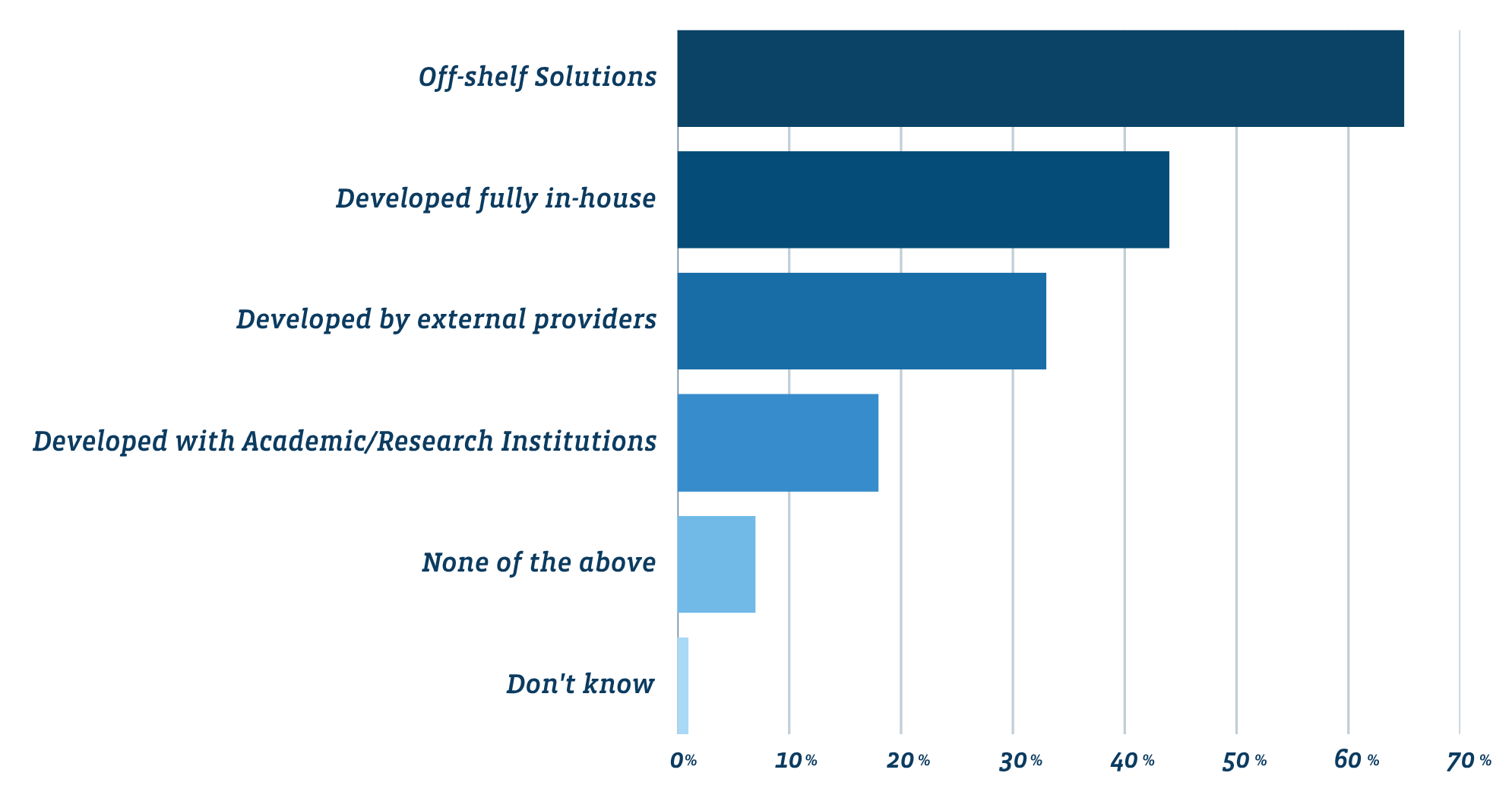
Multifaceted landscape dominating, ICT strong in in-house
To gain a deeper understanding of AI implementation within companies, it is crucial to examine the sources of AI tools and systems being utilised.
The 2026 survey findings confirm that organisations continue to rely on a diversified mix of sourcing models for their AI solutions, reflecting a pragmatic and flexible approach to accessing AI capabilities.
The three dominant channels remain off-the-shelf products, in-house development, and external providers, jointly used by the vast majority of respondents. This indicates a high degree of continuity in the overall structure of the AI supply landscape.
However, a closer look at the data reveals a gradual shift in preferences. Most sourcing options show a relative decrease in use compared to 2025, notably off-the-shelf and fully in-house developed solutions, reflecting a normalisation effect as the scope of respondents grows and AI adoption expands beyond early adopters, rather than a disengagement from AI.
In contrast, the use of external AI providers is the only sourcing model that has not declined, signalling a clear trend towards outsourcing and service-based access to AI capabilities. This evolution is fully consistent with the barriers identified earlier in the survey, where cost, the availability of skilled talent and uncertainty around return on investment were cited as major barriers to in-house implementation.
Despite these relative changes, the overall hierarchy of the sourcing landscape remains largely stable. Off-the-shelf solutions continue to be the most common choice, in-house development remains concentrated among a limited group of organisations, and collaboration with academia or public research institutions persists a niche channel.
Focus on manufacturing and ICT sectors
Manufacturing sector
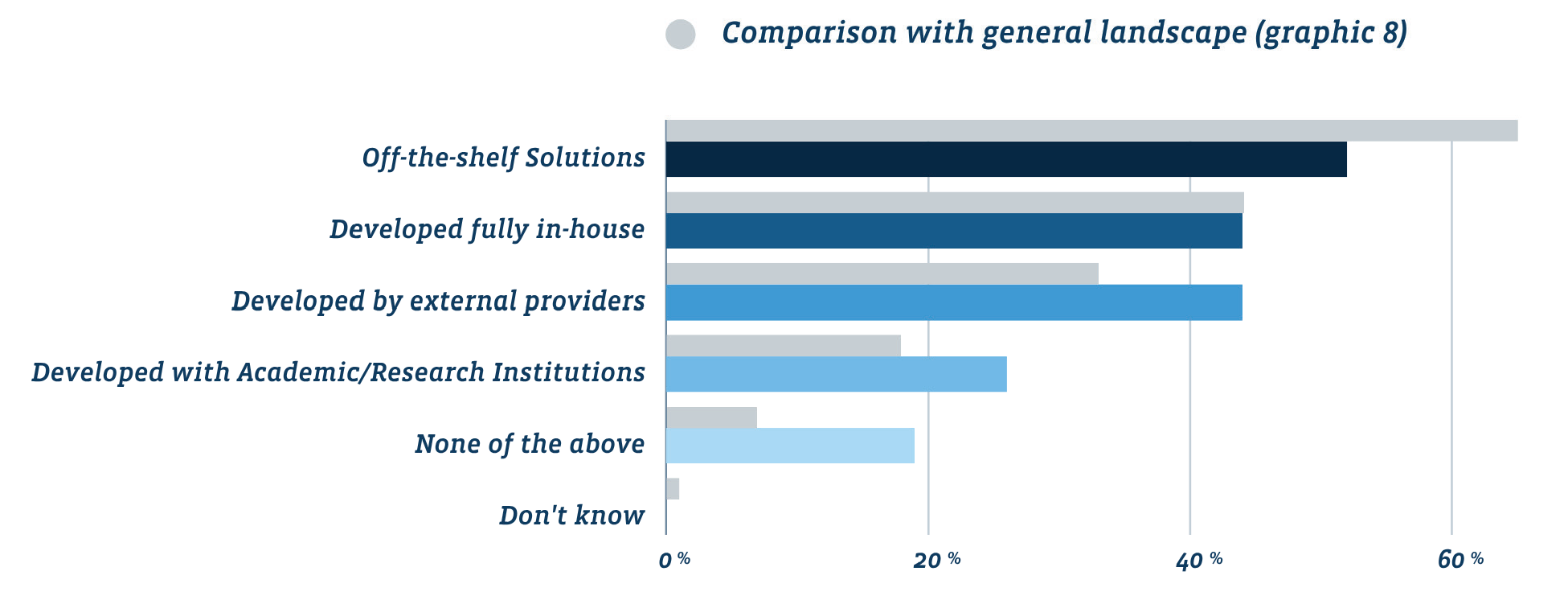
In the manufacturing sector, AI sourcing strategies remain highly pragmatic and operationally driven. Off‑the‑shelf solutions continue to play a central role, particularly where they can be integrated into existing industrial systems and processes.
Fully in‑house developed AI solutions remain strongly correlated with company size. Larger manufacturing companies are far more likely to develop AI internally, as they have the necessary financial, technical and human resources to do so.
Collaboration with academic or research institutions appears mainly among large manufacturing companies, often in the context of R&D‑intensive or long‑term innovation projects. This reveals a structural challenge: for SMEs, such collaborations are still perceived as difficult to access, whether due to lack of awareness, limited internal capabilities or perceived administrative complexity.
ICT sector
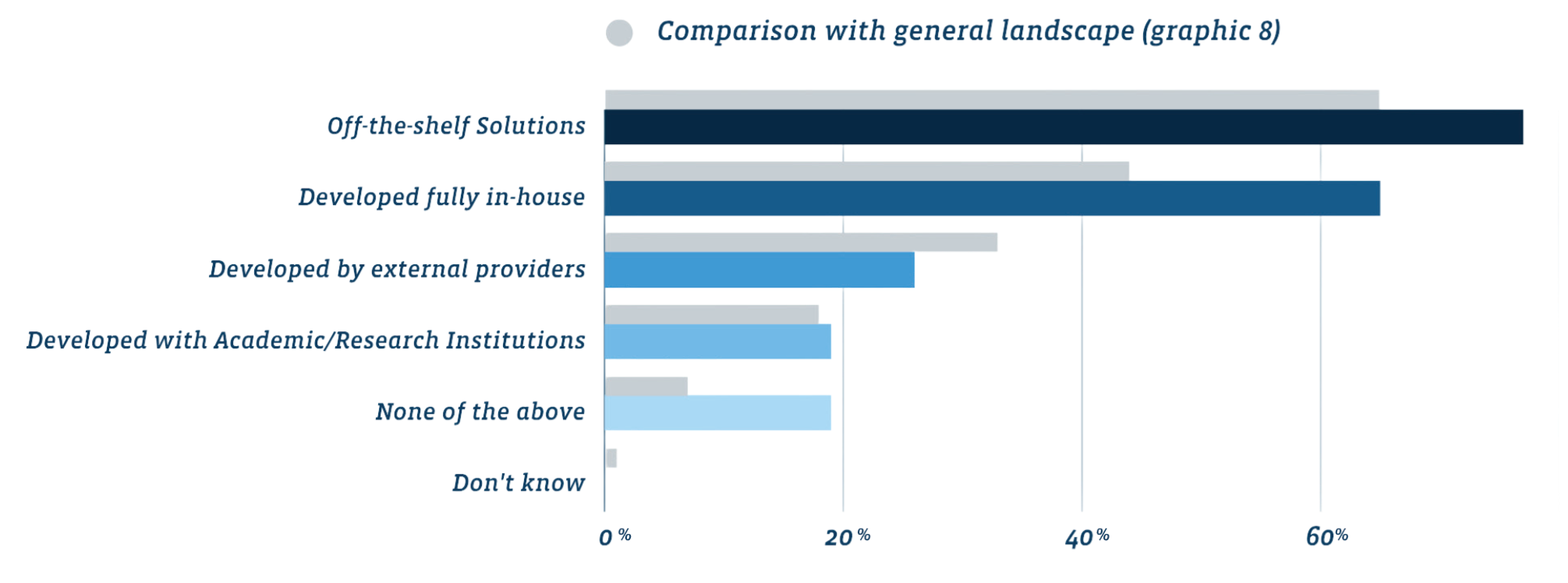
The ICT sector displays a distinctly different pattern, with noticeable changes in the relative shape of sourcing compared to 2025. In 2026, ICT companies show a clear shift away from fully in‑house development, increasingly favouring the purchase and integration of market‑ready solutions and services. This reflects a higher level of market awareness: ICT players are often more familiar with what is available market offerings and are therefore less inclined to “reinvent the wheel” and develop solutions from scratch.
Two complementary drivers explain this evolution. On the one hand, ICT companies increasingly recognise that developing AI solutions fully in‑house is highly resource‑consuming, complex and costly, even for technically mature organisations. On the other hand, the AI and GenAI market offering has expanded significantly, with a wide range of competitive, scalable and rapidly improving solutions now available.
Off‑the‑shelf AI solutions: dominant ecosystems and hybrid strategies
In 2026, off‑the‑shelf AI solutions are characterised by a strong preference for widely available, scalable and enterprise‑ready platforms, most often integrated into existing IT environments. The sourcing landscape shows a clear concentration around a limited number of dominant ecosystems, complemented by a range of more specialised tools addressing specific business needs.
- Large language model–based platforms and GenAI assistants: A first and most frequently cited solutions revolve around Large Language Model platforms and GenAI assistants. Solutions from the Microsoft ecosystem, most notably Microsoft Copilot and Azure OpenAI–based services, are particularly prominent, benefiting from deep integration with workplace tools and enterprise‑level security frameworks. OpenAI’s ChatGPT also features extensively, both through its public interface and via enterprise or API‑based deployments. Other GenAI platforms, including Google’s solutions and alternative LLM providers, appear less frequently but remain present within the ecosystem.
- Cloud‑based AI and data platforms: A second group of off-the-shelf solutions concerns cloud-based AI and data platforms. Respondents refer to major cloud providers offering pre-built AI services, including machine learning, analytics, natural language processing and computer vision capabilities. These platforms are typically used to accelerate development, experimentation and deployment without the need to build models entirely in-house.
- Specialised AI software solutions: Specialised AI applications targeting specific functions or use cases form a third group targeting specific business functions or use cases. These include tools for document processing, intelligent search, customer support chatbots, robotic process automation, predictive analytics, quality control and industrial optimisation. Such solutions are often described as being integrated into ERP, CRM or production systems, reinforcing their operational relevance.
- Open‑source and semi‑commercial solutions: Several respondents also mention open-source or semi-commercial solutions, sometimes combined with commercial support or internal hosting, particularly where flexibility, transparency or cost considerations are important.
The responses indicate that organisations tend to adopt a hybrid approach, combining mainstream off-the-shelf AI and GenAI platforms with more specialised solutions depending on business priorities. The choice of solutions is frequently influenced by ease of integration, security, compliance, scalability and alignment with existing IT ecosystems, rather than by a single dominant sourcing model.
Knowledge of AI ecosystem in Luxembourg
A technology first approach to the AI ecosystem
The responses show a moderate and uneven level of familiarity with the AI ecosystem in Luxembourg, varying significantly depending on the type of actor considered.
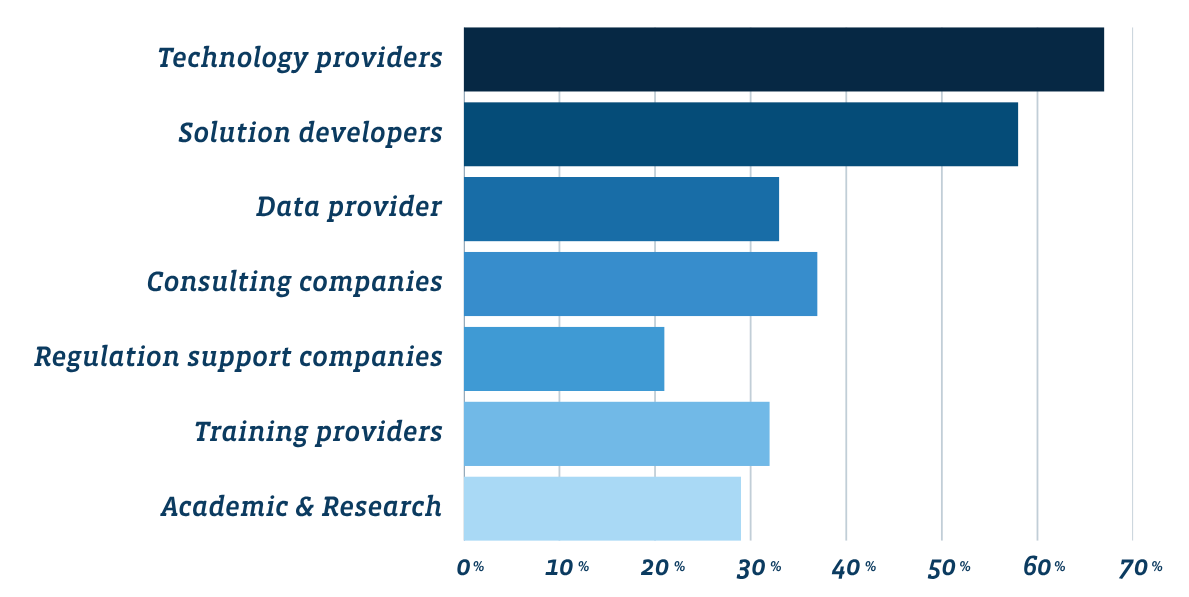
A large majority of respondents indicate being familiar with AI technology providers (67% of respondents), suggesting that companies generally have strong visibility on commercial AI solution providers and vendors, particularly those offering off-the-shelf tools, platforms and cloud-based AI services. These actors represent the most immediate and tangible access point to AI for many organisations, which is consistent with the results of the previous questions.
Familiarity with the public and semi-public support ecosystem is more moderate. 53% of respondents report being familiar with stakeholders such as Luxinnovation, research institutes, competence centres and other public support organisations. While these actors are relatively well identified, a significant share of companies remain only partially connected to the institutional AI support landscape.
Familiarity with consulting firms and other commercial support providers is more limited still. Only 37% of respondents indicate being familiar with this segment of the ecosystem, suggesting that advisory and consultancy services related to AI are either less visible or less systematically mobilised by companies.
These findings show that ecosystem awareness is strongest for technology providers, more moderate for public support actors, and weakest for consulting and advisory services. This pattern suggests that companies primarily engage with AI through concrete solutions and tools, while broader ecosystem support and advisory services remain comparatively under-exploited or less clearly positioned.
The importance of the ecosystem
An analysis of survey responses (Graphic 2, Graphic 11 and Graphic 12) measuring digital maturity, awareness, and innovation activity reveals a strong, statistically significant positive correlation between a company’s awareness of government AI support programmes in Luxembourg and its level of innovation. Companies aware of these support mechanisms are not only more innovative but also more collaborative and further along in their AI adoption journey.
- Enhanced collaboration: Aware companies engage with a significantly wider range of external partners, such as universities and research centres. On average, they collaborate with nearly four different partner types, compared to just over two for companies unaware of the available support.
- Advanced AI adoption: This awareness also correlates with a higher level of AI maturity (maturity score from 0 to 5 calculated based on Graphic 2 correspondant responses). The average maturity score for aware companies is 2.3, placing them firmly in the « Exploring » phase of AI implementation. In contrast, the unaware group scores an average of 1.69, suggesting they are at a much earlier stage, with many having no concrete plans for adopting AI.
Government support mechanisms awareness
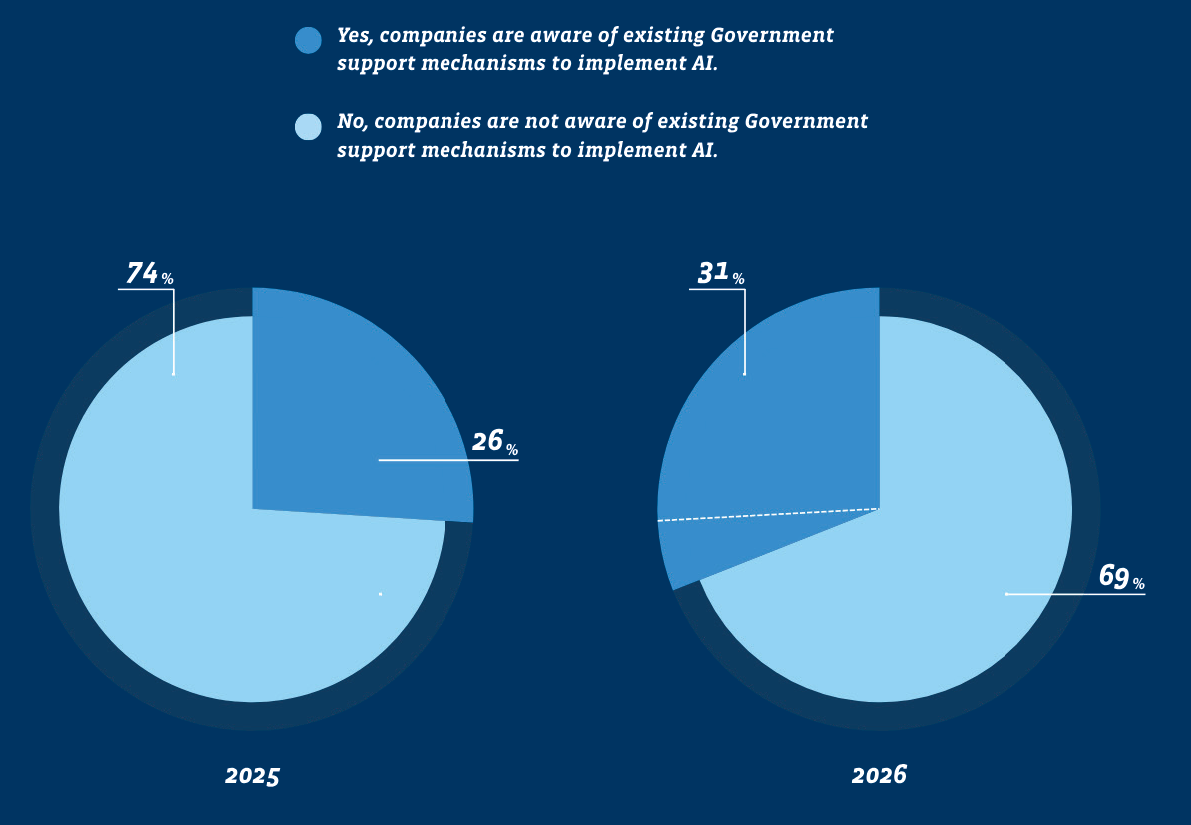
Broadening AI support awareness across companies
Our survey shows an improvement in awareness of government support mechanisms for AI implementation compared to previous years, indicating that ongoing communication and outreach efforts are starting to deliver tangible results.
A clear size-related contrast emerges from the data. Among companies with more than 100 employees, awareness has increased substantially, from 17% to 40%. By contrast, the situation remains more challenging for small companies and micro-enterprises. For organisations with fewer than 100 employees, awareness has also progressed, albeit more gradually, from 21% to 26%. This more modest progression highlights persistent structural constraints in smaller organisations, notably limited internal capacity, lack of dedicated staff to monitor public programmes, and lower availability to engage with support ecosystems and institutional communication.
The consistent improvement in overall awareness marks a significant step forward, highlighting the growing success of communication efforts. This progress creates a clear opportunity to refine Government support communication strategy further by focusing on small SMEs. By developing tailored outreach programmes, simplifying key messages and providing localised support, public stakeholders better address the specific needs and resource constraints of smaller organisations.
Widely recognised support mechanisms
Growing awareness of support mechanisms
Awareness of AI‑related support mechanisms in Luxembourg remains largely concentrated around a limited number of well‑established public programmes and institutions. Recognition is strongest for the most visible national initiatives, which continue to act as primary reference points for companies engaging with AI.
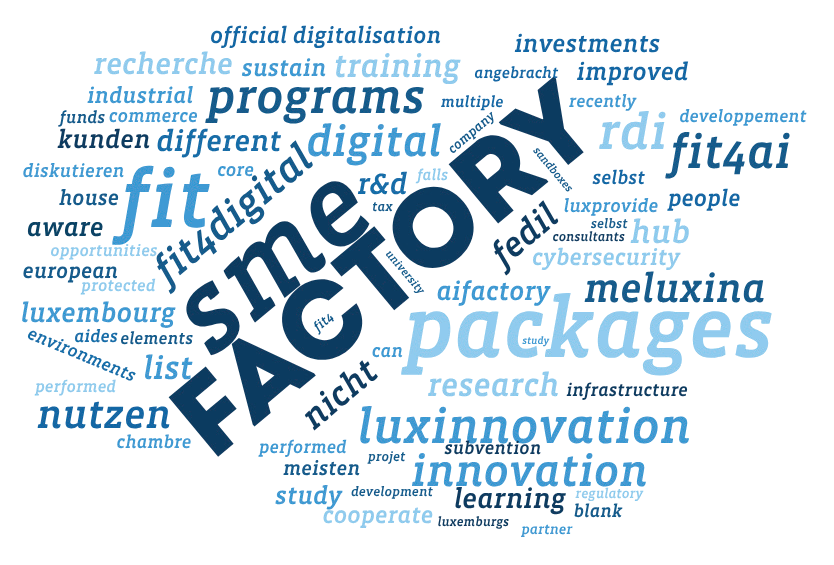
Among these, Fit 4 AI stands out as the most widely identified programme, cited by 50% of respondents. Even though it was launched recently, the AI Factory is already mentioned by approximately 30% of respondents. Other frequently referenced mechanisms include Fit 4 Digital, general SME Packages (around 20% of responses), as well as RDI grants and public subsidies supporting innovation and digital transformation. These instruments are mainly perceived as key entry points for financial support and structured project development.
Luxinnovation features prominently as a central ecosystem actor. Companies associate it particularly with innovation advisory services, guidance in identifying relevant funding opportunities, and support for AI and broader digital transformation projects.
A more limited number of respondents refer to research institutes and competence centres, primarily in the context of applied research activities or pilot projects. Training and awareness initiatives, such as workshops and seminars on AI and digital skills, are mentioned less frequently and are more often associated with upskilling objectives rather than direct implementation support.
Disclaimer : This question generated 40 responses and was formulated as an open‑ended question, without predefined options. As a result, responses reflect spontaneous recall of support mechanisms and provide insight into relative visibility rather than exhaustive awareness across the ecosystem.
The Luxembourg AI Factory supports all companies in their adoption process of Artificial Intelligence, regardless of their level of maturity. As a one-stop shop, it provides tailored guidance with access to assessment, training, data, sovereign infrastructure and connections with the local and European AI ecosystem. Discover all the services available at:
Key takeaways
A strong foundation for growth: connecting AI support with ecosystem
A combined reading of the survey sections addressing ecosystem engagement and public support mechanisms reveals a progressive narrowing of awareness as companies move from general ecosystem recognition to concrete knowledge of public support mechanisms. A majority of businesses are already familiar with AI technology providers and key institutional players, providing a solid baseline for deeper and more structured engagement.
Around one third of respondents state that they are aware of public support mechanisms to implement AI, responses consistently show that this awareness is largely concentrated around a number of well-established programmes and institutions.
The visibility of flagship programmes such as Fit 4 AI combined with the central advisory role of Luxinnovation demonstrate the success of existing support initiatives. These well-known entry points serve as powerful and effective models for guiding companies toward successful AI implementation.
The next step is to build on this momentum. By amplifying the visibility and the clarity of the full range of available public support mechanisms, every company’s interest in AI can be matched with a clear, accessible and actionable pathways to action. This strategic focus on communication and outreach will empower more businesses to leverage existing resources, and in turn, accelerating AI adoption across the entire economy.
Required AI skills
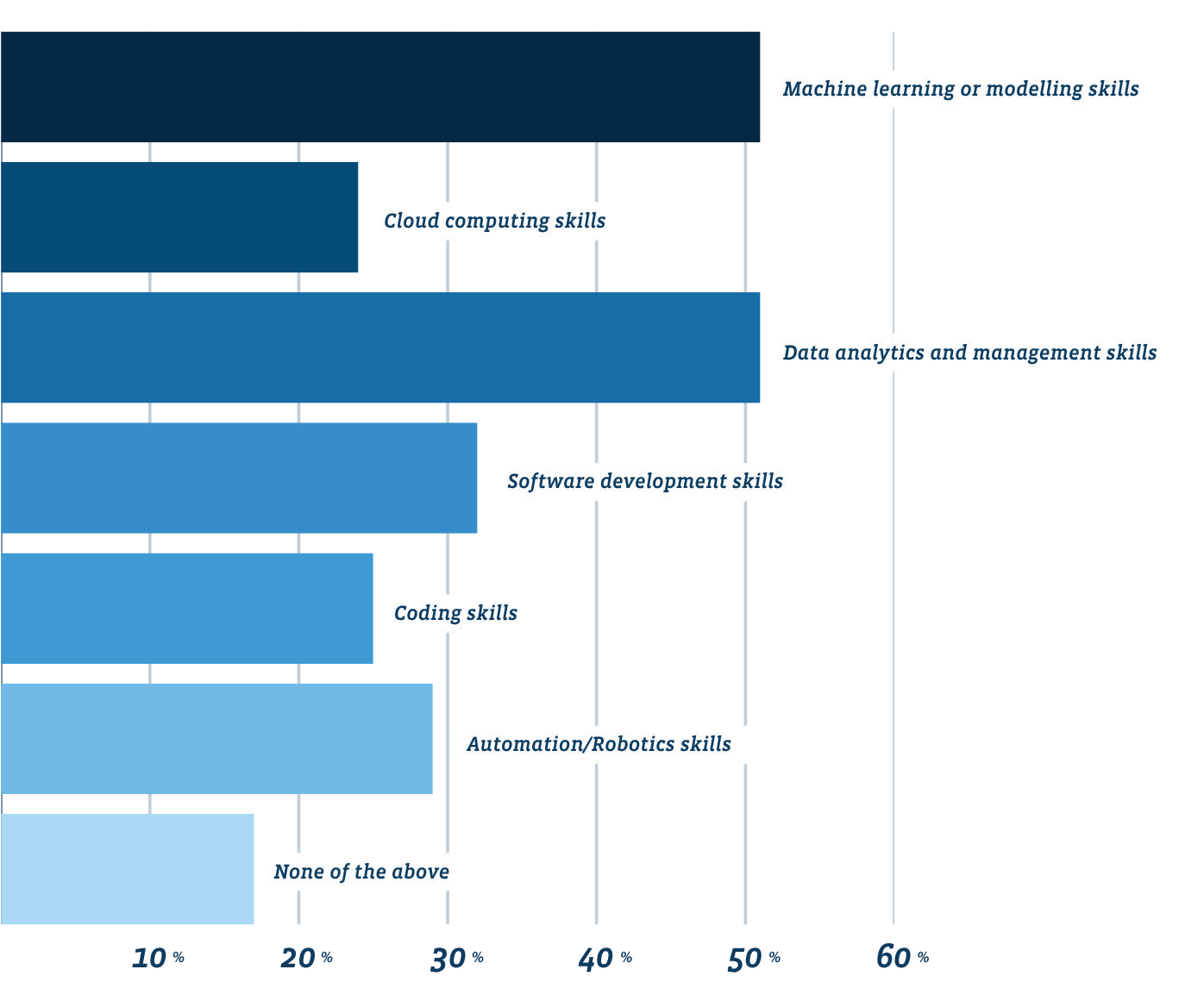
Skills gaps: structural constraints, gradual capacity building
The comparison of the 2025 and 2026 results shows that the overall structure of perceived skills gaps remains largely unchanged, even as their intensity declines across most categories in 2026.
Across both survey editions, respondents consistently identify technical and data-related skills as the main bottlenecks for AI implementation. Machine learning and AI modelling skills, data analytics and data management, and software development-related skills remain at the top of the list. These findings underline that the core technical foundations capabilities required to design, deploy, and scale AI solutions are still perceived as insufficiently available. A notable disconnect further emerges: between 45% and 48% of the companies reporting a shortage in machine learning and data analytics skills also state that they do not know the relevant training providers. This points to a dual challenge, combining talent scarcity with limited visibility of upskilling and reskilling opportunities. Skills therefore continue to represent a structural constraint, even though organisations are progressively building internal capacity.
However, the share of respondents selecting these skills as lacking is systematically lower in 2026 than in 2025. This downward trend indicates that an increasing number of organisations have either developed internal competencies, secured access to external expertise, or improved their understanding of AI technologies through experimentation and early deployments.
The comparison confirms that skills shortages remain a structural challenge, but one that is evolving rather than worsening. The stability of similar rankings across both years shows continuity in needs, while the lower figures in 2026 reflect progressive learning effects, capacity building, and ecosystem maturation.
This data underscores that addressing the skills gaps remain essential to facilitate AI adoption and ensure that companies can effectively leverage AI technologies.
Knowledge level of the Artificial Intelligence Act (AI Act)
The AI Act: growing awareness, persistent operational complexity
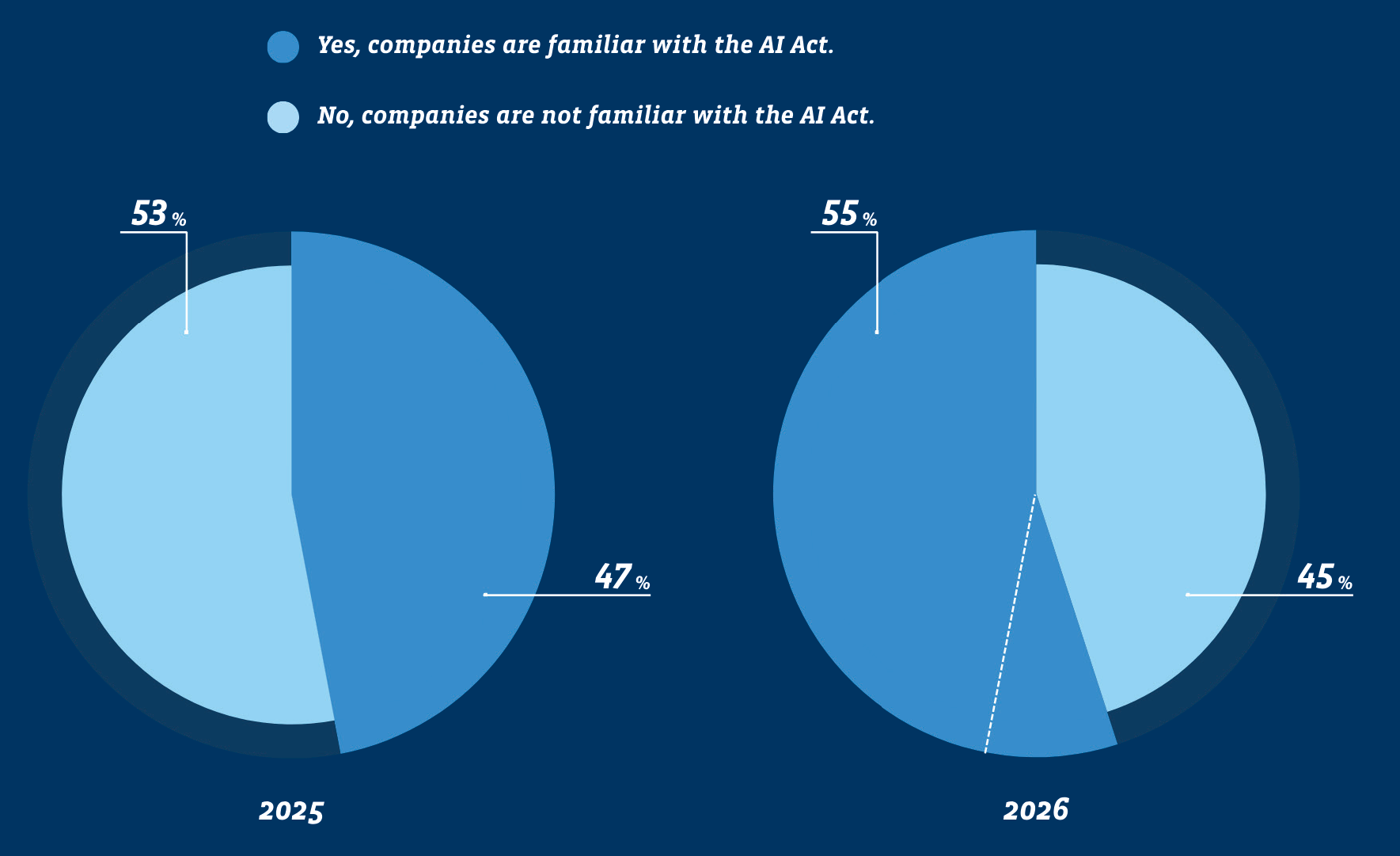
Familiarity with the European AI Act has increased between 2025 and 2026, indicating a progressive rise in regulatory awareness among companies. This evolution is likely driven by more frequent public discussions at EU level, broader media coverage and the growing presence of the AI Act in ecosystem‑level exchanges around AI adoption.
Despite this positive dynamic, a substantial share of organisations remains unfamiliar with the AI Act in 2026. This situation points to a persistent gap between the rapid pace of AI deployment and the level of regulatory preparedness within companies. For many organisations, the AI Act continues to be perceived as complex, abstract or insufficiently operational, particularly in the absence of clear translation into concrete business obligations. This perception underscores the need for continued support and guidance to facilitate its practical implementation.
While regulatory awareness has undeniably progressed since 2025, it has done so from a low baseline and still lags behind the speed at which AI technologies are being adopted. This gap is especially visible among smaller organisations, which tend to prioritise experimentation and operational use cases over compliance considerations.
The central challenge now lies in moving beyond general awareness towards a practical, actionable understanding of regulatory requirements. Supporting companies in translating the AI Act into concrete governance, risk management and compliance practices will be essential to ensure that AI adoption and regulatory readiness evolve in parallel, rather than at diverging speeds.
The EU Artificial Intelligence Act
The EU AI Act is the world’s first comprehensive framework for regulating Artificial Intelligence. It aims to ensure that AI systems in the EU are safe, respect fundamental rights, and build trust in innovation. Based on a risk‑based approach, it classifies AI systems into four levels, unacceptable, high, limited, and minimal risk, with stricter rules for high‑risk applications. The AI Act is part of the EU’s broader digital agenda, including the Digital Omnibus package, which seeks to streamline and align digital regulations. Together, these initiatives aim to promote trustworthy, human‑centric AI while supporting innovation and competitiveness across Europe.
Use of GenAI public tools among employees
Mainstream adoption
GenAI has rapidly become a natural extension of everyday digital tools in the workplace, largely driven by its ease of access and by the fact that employees are bringing into their professional environment the same tools they already use in their personal lives. In 2026, GenAI is no longer perceived as an experimental or niche technology, but as a standard productivity instrument that employees increasingly expect to be able to use at work, much like at home.
This widespread adoption is strongly fuelled by the consumer‑grade, intuitive nature of GenAI tools, which makes them accessible to a broad range of profiles and suitable for many everyday professional tasks, without requiring technical expertise. As a result, GenAI usage has become mainstream across company sizes, sectors and job profiles, driven as much by user expectation as by organisational initiatives.
This accelerated normalisation of GenAI usage, however, raises important questions about how organisations are adapting their internal frameworks to this new reality.
Corporate policies regarding GenAI
GenAI embraced, governance delayed
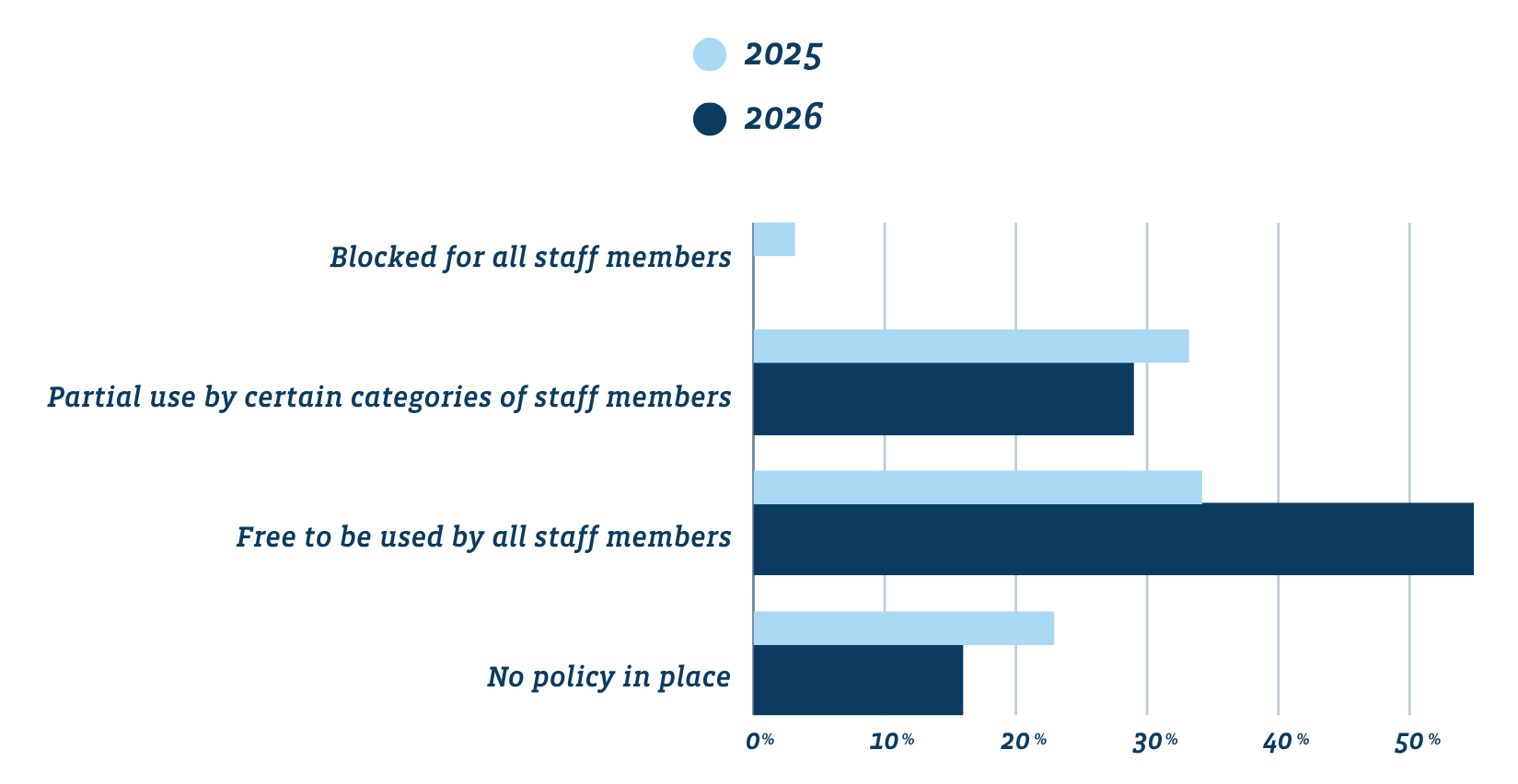
Organisational attitudes towards GenAI have undergone a clear shift compared to 2025. In 2026, the share of organisations blocking GenAI has dropped to a marginal level, whereas restrictive or prohibitive approaches were still present the previous year. This evolution reflects a broad recognition that GenAI has become a must‑use tool, and that banning it is neither effective nor sustainable given its deep integration into daily professional practices and employee expectations.
However, formal governance frameworks have not progressed at the same pace. The proportion of companies without a dedicated GenAI policy remains high and largely unchanged compared to 2025.
In practice, many organisations allow GenAI usage, but without having yet defined clear internal rules, guidelines or governance structures to frame how these tools should be used.
This situation reveals a structural gap between acceptance and governance. While GenAI is widely recognised as valuable and unavoidable, many organisations have not yet translated this acceptance into formal policies addressing critical issues such as data protection, security, compliance, acceptable use and human oversight. This does not contradict the broader progress observed in AI governance overall but highlights a specific lag when it comes to formalising GenAI‑specific usage rules.
The evolution between 2025 and 2026 therefore confirms a normalisation of GenAI usage within organisations, paired with a persistent governance challenge. Bridging this gap will require targeted support and guidance to help companies move from implicit, user‑driven adoption towards structured, secure and compliant GenAI usage.
Perception on GenAI
Confidence locked in: GenAI enjoys overwhelming positive consensus
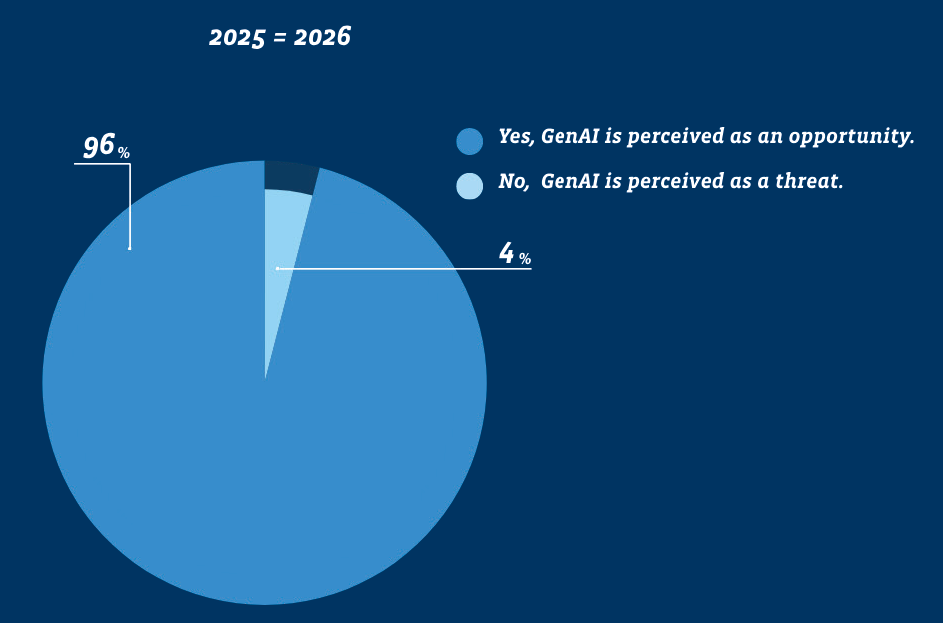
Despite the broader scope of respondents in 2026, the way organisations perceive GenAI remains remarkably consistent. Across sectors, company sizes and levels of AI maturity, GenAI is predominantly viewed as an opportunity rather than a threat, confirming a general and widely shared consensus within the business community.
This stability compared to 2025 suggests that perception of GenAI is no longer driven by novelty or hype but have reached a more structural and mature stage. GenAI is now largely seen as a tool for productivity, efficiency and support to employees, rather than a disruptive or destabilizing technology. As in 2025, this favourable perception coexists with well-identified concerns, particularly related to governance, data protection, reliability and appropriate human oversight. However, these concerns do not fundamentally challenge the positive view of GenAI; rather, they reflect a desire for clearer frameworks and safeguards, not a rejection of the technology itself.
Assessment of potential benefits of GenAI
GenAI aligns with core AI benefits
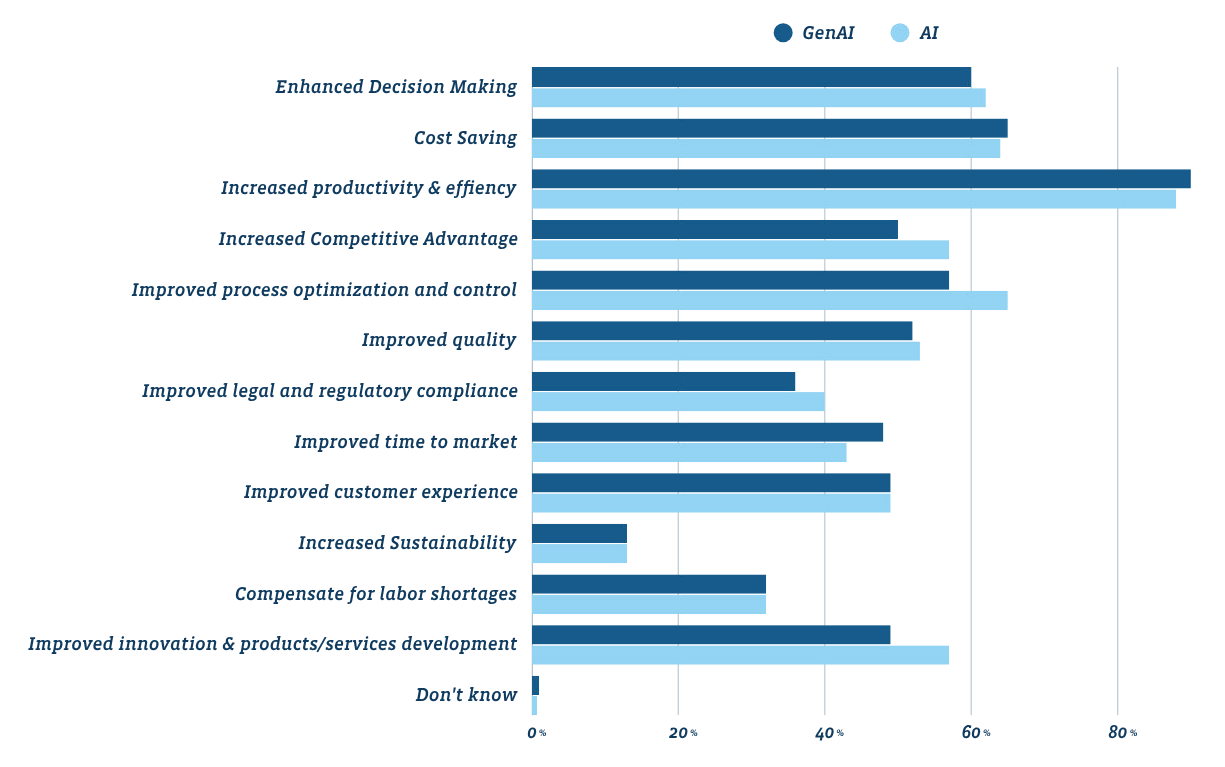
Across the survey, GenAI benefits are primarily associated with efficiency gains, productivity improvements, cost reduction and better decision-making, mirroring the expected benefits traditionally attributed to AI technologies. This strong overlap confirms that GenAI is not seen as a fundamentally separate category, but rather as a natural extension of existing AI capabilities, applied more directly to knowledge-intensive and cognitive tasks.
However, while the general structure of benefits remains very similar, the results show more pronounced differences for a limited number of dimensions.
The largest gaps between AI and GenAI perceptions are observed in competitive advantage, process optimisation, and innovation and product or service development. For these dimensions, GenAI is more frequently perceived as a strong enabling factor, reflecting its ability to accelerate ideation, content creation, prototyping and redesign of workflows.
In particular, GenAI appears to reinforce the perception that AI can support faster innovation cycles, enable new ways of working, and contribute to differentiation in competitive environments, especially through increased agility and responsiveness. These aspects tend to be less prominent, or more indirect, in the perception of traditional AI use cases.
The findings confirm a strong convergence between AI and GenAI benefit perceptions, with selective reinforcement on areas where GenAI brings additional value, pointing towards a growing strategic rather than purely operational role for GenAI.
Plans to implement or implemented GenAI use cases
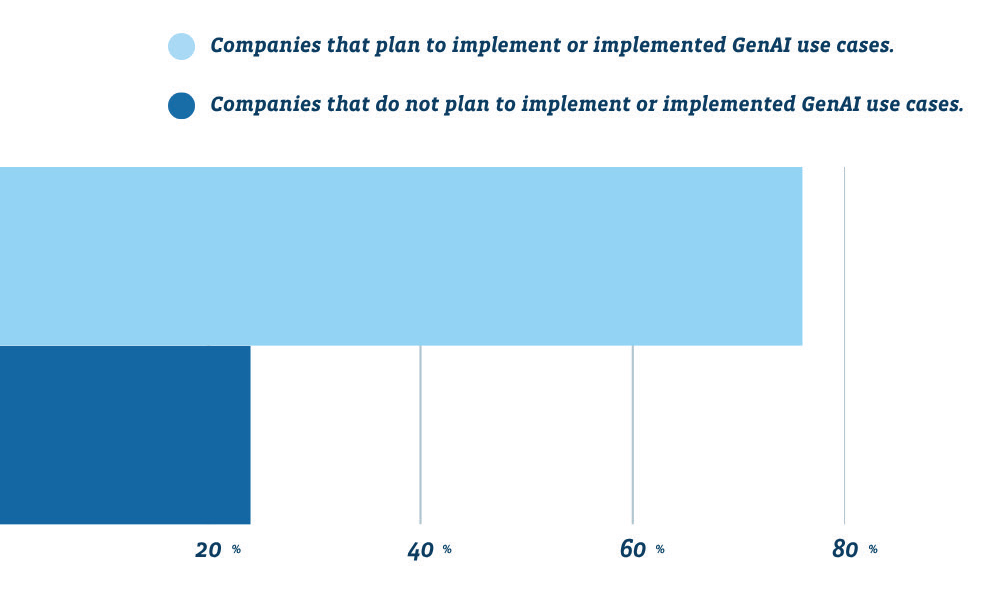
GenAI moves from pilots to structured deployment
The adoption of GenAI at organisational level continues to expand, building on an already high adoption base.
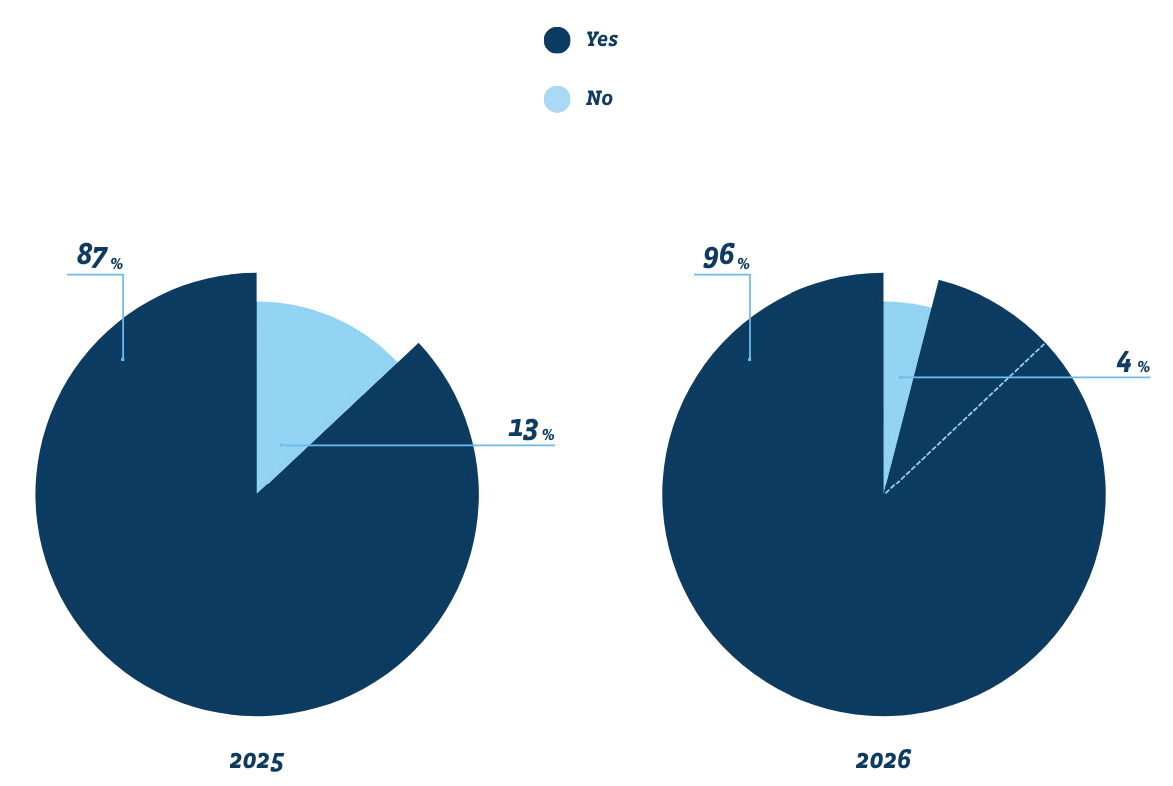
In 2026, the proportion of companies that have already implemented GenAI use cases or plan to do so has further increased compared to 2025, with a rise of around 6 percentage points. This evolution confirms a clear and sustained upward trend. Rather than indicating a catching-up effect, the results suggest a deepening and consolidation of GenAI deployment, with more organisations moving from experimentation to concrete implementation or formal planning.
The trend is largely explained by two converging factors. First, the rapid expansion of available GenAI products and solutions on the market has lowered entry barriers and made adoption more accessible for a broad range of organisations. Off-the-shelf tools, enterprise-grade platforms and integrated solutions are now widely available, reducing both technical complexity and implementation time. Second, the growing acceptance of GenAI within organisations, as highlighted in previous questions, has created a more favourable environment for deployment, both at employee and management levels.
Importantly, the results remain consistent across company sizes and sectors, suggesting that GenAI adoption is no longer limited to frontrunners or technology-intensive organisations, but is increasingly embraced across the broader economic fabric, confirming its transition from a niche innovation to a widely adopted business tool.
Main GenAI use cases
The responses from organisations already implementing or planning to implement GenAI (76%) are focusing on a set of pragmatic, business‑oriented and largely convergent use cases, primarily targeting productivity gains and operational efficiency.
- Text‑based and knowledge‑intensive activities: The most frequently cited GenAI use cases relate to text‑based and knowledge‑intensive activities. These include document drafting and summarisation, report and email generation, translation, internal knowledge search, and assistance with legal, HR or administrative documents. These use cases reflect the strong penetration of GenAI in support and corporate functions, where quick efficiency gains can be achieved with limited technical integration.
- Process automation and workflow support: Another major category of use cases concerns process automation and workflow support. Companies report using or planning to use GenAI to support customer service (chatbots, ticket handling, first‑line support), internal IT or HR helpdesks, and the automation of repetitive information processing tasks. These applications directly build on the ability of GenAI to handle natural language at scale.
- Software development and technical tasks: GenAI is also increasingly mentioned as a tool supporting software development and technical tasks, including coding assistance, debugging, scripting and documentation. This confirms the strong adoption of GenAI among technical profiles and its role as a productivity accelerator for development teams.
- Innovation‑related and creative use cases: In addition, several respondents refer to innovation‑related and creative use cases, such as idea generation, marketing content creation, product or service design support, and early‑stage prototyping. These use cases illustrate how GenAI is not only used to optimise existing processes, but also to support innovation and speed up experimentation cycles.
Key takeaways
We can emphasise that the diversity of use cases remains relatively broad, but the results point to a clear concentration on concrete, low‑barrier and high‑impact applications.
GenAI is primarily deployed where it can rapidly augment human work without requiring heavy system integration.
We asked the 24% of respondent organisations that do not plan to implement GenAI use cases to explain their reason(s) for this.
Key takeaways
The underlying reasons remain largely unchanged compared to 2025.
- The most frequently cited reasons relate to data security, confidentiality and compliance concerns. Many respondents express reservations about sharing sensitive or strategic information with public or external GenAI tools, reflecting persistent worries over data protection, intellectual property and regulatory exposure. These concerns mirror those already identified last year and remain a dominant factor explaining hesitation.
- A second recurring reason is the lack of clearly identified use cases. Some companies indicate that, despite a general interest in GenAI, they have not yet identified concrete applications that would justify implementation. This suggests that GenAI is still perceived as relevant, but not yet sufficiently aligned with specific business needs or operational priorities in all organisations.
- Resource constraints also continue to play a role, particularly for smaller organisations. Limited internal capacity, time constraints and competing priorities are mentioned as barriers delaying GenAI adoption, especially when implementation would require additional governance, training or internal coordination efforts.
- Finally, a smaller group of respondents refer to uncertain return on investment (ROI) or adopt a deliberately cautious “wait and see” approach, preferring to observe further market and regulatory developments before committing to deployment.
The results confirm that non‑adoption is increasingly marginal and largely driven by the same structural concerns as in 2025. Importantly, these reasons do not reflect a negative perception of GenAI itself, but rather a lack of readiness or assurance on governance, security and relevance. As GenAI solutions mature and organisational frameworks become clearer, these barriers are likely to continue diminishing.
Analysis of popular GenAI platforms and providers: Key trends
The responses show a mature and diverse technology landscape. While the major US tech giants form the foundation of most GenAI strategies, companies are pragmatically adopting a multi-provider approach, prioritising security through in-house solutions, and increasingly turning to European and specialised alternatives.
- Microsoft and OpenAI are the dominant market leaders. Microsoft, through its integrated Azure and Copilot offerings, and OpenAI with its widely-used ChatGPT, are the most frequently mentioned providers.
This indicates a two-pronged adoption strategy in many organisations:- Enterprise integration with Microsoft: Many companies explicitly mention « Microsoft », « MS Azure », and « Copilot ». This highlights the success of Microsoft’s strategy to embed AI directly into the enterprise software ecosystem that companies already use, making it a natural starting point.
- Direct access via OpenAI: « OpenAI » and « ChatGPT » are ubiquitous. This suggests that alongside integrated enterprise solutions, direct access to powerful foundational models for a wide range of tasks remains a core part of the toolkit for many employees and developers.
- A « Best-of-Breed » multi-provider strategy is standard. Very few companies are locking themselves into a single ecosystem. The overwhelming trend is a sophisticated, multi-model approach, selecting the best tool for each specific job.
- Mixing and matching: It is common to see combinations like « OpenAI, Anthropic, Google, Mistral (all, depending on use case) ». This pragmatic strategy allows companies to leverage the unique strengths of different models, whether it’s Claude for coding, Mistral for European language nuances, or Google’s ecosystem for data analytics.
- Platform-agnostic platforms: Several firms have developed their own internal platforms that provide access to multiple underlying models. One company mentioned « We have developed our internal platform providing access to multiple LLMs and agents », giving them flexibility and control.
- In-house and open-source solutions are crucial for security and control. A significant number of organisations are not just relying on public cloud services. There is a strong movement towards building internal capabilities and leveraging open-source models to address data security and customisation needs.
- Data sovereignty: The desire for control over sensitive data is a primary driver. Responses like having « our own platform owned in our data centre in Luxembourg » and using « notre serveur propre » (our own server) underscore the importance of data residency and privacy.
- Customisation and flexibility: Open-source models (« self hosted Llama », « Hugging Face ») are being deployed to create highly tailored solutions. This allows companies to fine-tune models on their proprietary data without exposing it to third-party providers.
- European and specialised challengers are gaining ground. While the US giants lead, the market is far from a monopoly. European providers and specialised tools are establishing a firm foothold.
- The rise of a european alternative: « Mistral AI » is mentioned multiple times, indicating its emergence as a credible European player that companies are actively using.
- Specialised niche models: « Anthropic (Claude) » is frequently cited, often specifically as « Claude Code », highlighting its strength in software development. This reinforces the multi-model trend, where specialised tools are chosen for tasks requiring deep domain expertise. The mention of local provider « LetzAI » also points to an interest in supporting and using local innovation.
The results confirm that the GenAI market has reached a level of sufficient maturity and diversity to support broad adoption. Organisations are not constrained by a lack of available solutions; on the contrary, the abundance of platforms enables rapid uptake and supports the continued increase in GenAI implementation observed in previous questions. The choice of platforms reflects a balance between accessibility, trust, integration and governance considerations, rather than a purely technological race for novelty.
Disclaimer: References to actors or solutions in this document are based solely on the spontaneous responses of survey participants and should not be interpreted as a recommendation or endorsement by FEDIL, Luxinnovation, or the AI Factory.
Plans to develop or host GenAI solutions locally
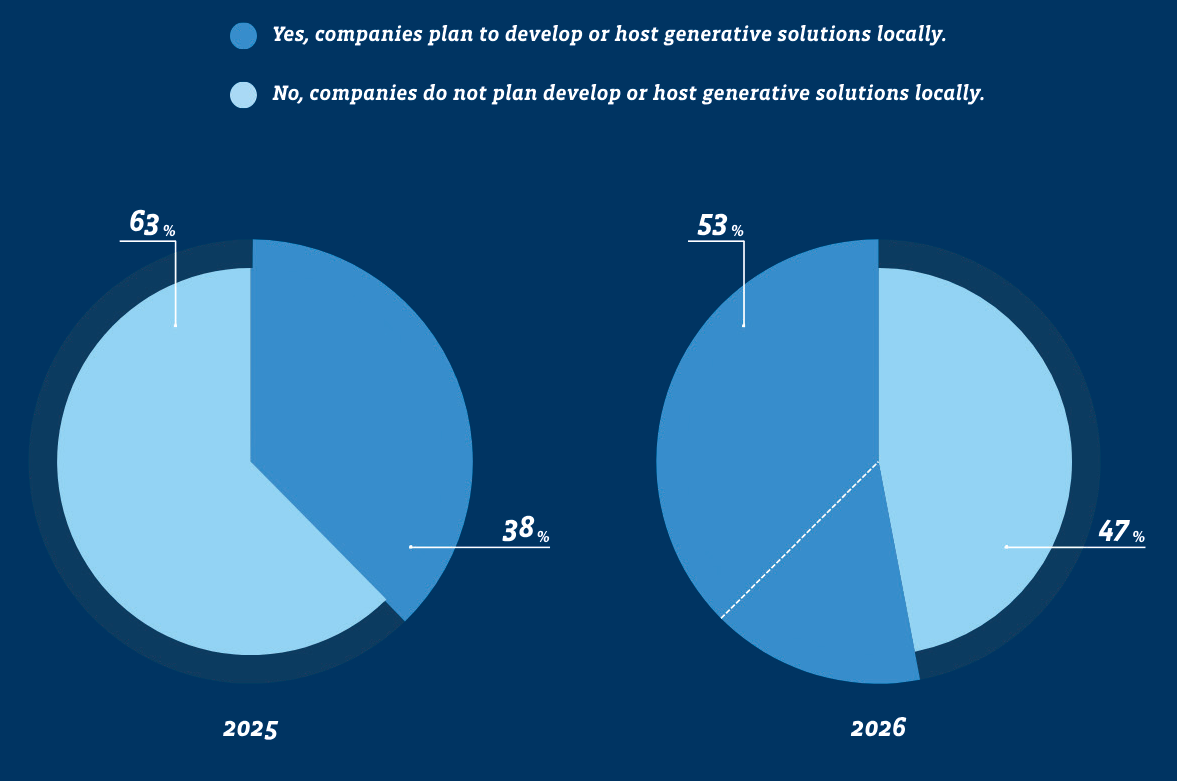
Sovereignty and security at stake
53% of respondents state they plan to develop or host GenAI solutions locally. Compared to 2025, a marked increase is observed in the proportion of companies planning to develop or host GenAI solutions locally.
This evolution reflects the growing importance of data sovereignty, security, compliance and risk mitigation, consistently across the survey results.
As GenAI usage becomes more widespread and embedded in core business processes, organisations are paying increased attention to where data is processed, how models are hosted, and how risks related to confidentiality, regulatory exposure and dependency on external providers can be managed.
This shift confirms that sovereignty and risk considerations have moved from secondary concerns to key decision drivers. The growing preference for local hosting does not signal a rejection of public or cloud‑based GenAI solutions, but rather a desire to regain control as GenAI becomes business‑critical.
The findings highlight a clear strategic inflection point: as GenAI adoption accelerates, organisations increasingly seek trusted, controlled and sovereign deployment models, especially among the most mature players. This trend is likely to continue as regulatory frameworks mature and GenAI becomes more deeply integrated into core operations.
Increasing interest towards sovereign and secure solutions
Interestingly, when we delve deeper into the motivations of the 53% of companies planning local development or hosting, a very strong and stable consensus across companies of all sizes and sectors remains regarding the main drivers behind the decision to develop or host GenAI solutions locally. Security and data sovereignty clearly stand out as the dominant motivations, confirming their central role in GenAI deployment strategies.
Both security and sovereignty remain at very high levels compared to 2025. This stability indicates that these two dimensions are no longer emerging concerns, but rather structural and long‑term priorities for companies. Regardless of company size or sector, respondents consistently highlight the need to retain control over sensitive data, reduce exposure to external risks, and ensure trust in GenAI systems as they become more deeply embedded in business processes.
Cost efficiency is also cited as an important factor, but at a more moderate and broadly similar level across most company sizes, with four out of ten companies mentioning it as a motivation. One notable exception appears among companies with 50 to 100 employees, where cost efficiency is mentioned less frequently. This may reflect a specific organisational profile for this group: companies that already have an IT function in place, but where teams remain relatively small and resources constrained, making cost considerations less decisive than risk, security and control.
A particularly significant evolution compared to 2025 is observed for compliance. In 2026, compliance considerations show a clear increase, rising from 30% in 2025 to 44%. This progression suggests that regulatory awareness is translating into concrete strategic decisions. The upcoming and evolving regulatory landscape, including instruments such as the AI Act, NIS2 and related cybersecurity and governance requirements, is increasingly influencing how companies structure their GenAI deployments.
The combined reading of these results confirms that local hosting and development decisions are no longer driven by a single factor, but by a converging set of risk‑related considerations. Security and sovereignty form the foundation, cost efficiency plays a secondary but stable role, and compliance is becoming a rapidly strengthening driver.
Glossary
A
AI: Artificial Intelligence
API: Application Programming Interface
C
CRM: Customer Relationship Management
E
ERP: Entreprise Resource Planning
G
GenAI: Generative Artificial Intelligence
I
ICT: Information & Communication Technologies
IP: Intellectual Property
L
LLM: Large Language Model
N
NIS2: Network and Information Security 2 Directive
NLP: Natural Language Processing
O
OCR: Optical Character Recognition
OT: Operational Technology
R
RDI: Research, Development, and Innovation
ROI: Return on Investment
S
SLAM: Simultaneous Localisation and Mapping
SME: Small and Medium Enterprise
U
UAV: Unmanned Aerial Vehicle