|
Getting your Trinity Audio player ready...
|
Wood is on the rise. As a renewable material capable of sustainably storing the carbon captured in forests, it now embodies what many expect from a more sustainable economy: building with what nature provides us, rather than with what it will no longer be able to give us. Our sector is delighted by this public support for timber as a building material. It is also in line with the ambition of the National Forestry Programme 2026–2040, currently under consultation, which aims for 30 per cent of new buildings to be constructed from timber.
But there is a blind spot. The very same public that is so enthusiastic about timber turns away or becomes concerned as soon as the subject turns to forestry itself: felling, machinery, logging sites in the forest, and the timber processing industry. It is as if the material could exist without the labour that produces it. As if an oak plank or a spruce roof structure fell from the sky rather than coming from a stand of trees managed, maintained and harvested by the men and women who make their living from it. Over the lifetime of a forest stand, economic activity accounts for only a tiny fraction of the time and area; for the rest of the time, the forest belongs to walkers, biodiversity and recreational activities. It is precisely this occasional, regulated activity that funds the maintenance of the stands and, in the long term, safeguards all the forest’s other functions. It is time to state this clearly, and the awareness-raising campaigns planned by the National Forest Programme (PFN) must help to achieve this.
For whilst there is growing demand for local timber, supply is declining: standing volume and production are falling, tree mortality is rising, and timber-processing industries in the region are closing down due to a lack of local raw materials to process. If supply fails to keep pace with demand, imports will fill the gap – to the detriment of the value created here, short supply chains and the sector’s carbon footprint. FEDIL Bois reiterates: the balance between supply and demand must be considered across the entire supply chain, from planting to utilisation, and become a cross-cutting objective of environmental and economic policies.
Added to this structural difficulty is a burden that has nothing to do with forestry apart from the mountains of paperwork it generates: excessive European regulation. The example of the European Deforestation Regulation (EUDR) is telling. This legislation was clearly drafted in an ivory tower, far removed from the reality on the ground it purports to govern. And we are not alone in making this observation: the authorities responsible for implementing it, already stretched across numerous other tasks, are struggling to keep pace with the regulations. The result is an additional administrative burden imposed on businesses and public services which, for their part, did not wait for Brussels to take action: in Luxembourg, deforestation has long been prohibited by law. We did not need a European regulation to achieve an objective that our national legislation already guarantees.
It is time to restore the balance. We need to strike a balance between growing demand for timber and a local supply that must be secured – through the rapid reforestation of damaged areas, by managing the imbalance between forest and game populations, and through a flexible planting policy that reconciles climate adaptation with the sector’s economic needs. We must also strike a balance between the recognition enjoyed by timber as a material and the recognition – which is still far too limited – that forestry work and downstream industrial activity deserve. And, finally, we must strike a balance between Europe’s regulatory ambitions and its actual capacity to implement them on the ground, so that businesses – and the public authorities supporting them – can focus on their core tasks: producing, processing and sustainably managing a resource that our society increasingly needs.
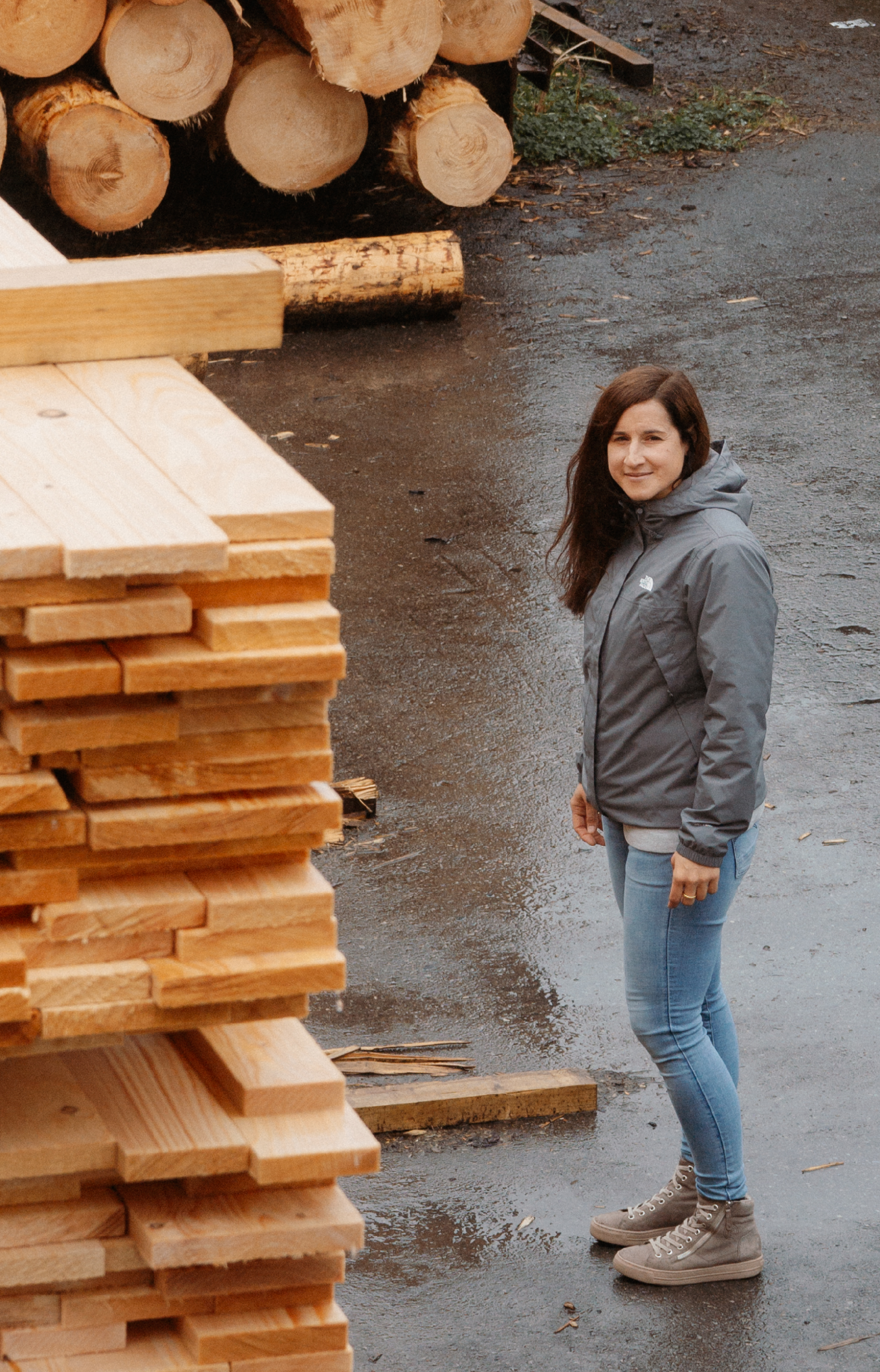
 Photos: © Forbes Luxembourg